
What the Regular Octagon Area Calculator Does
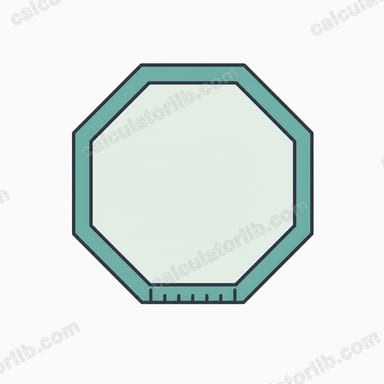
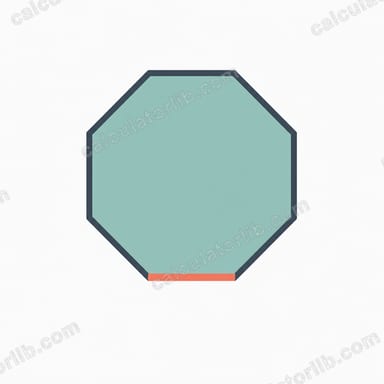
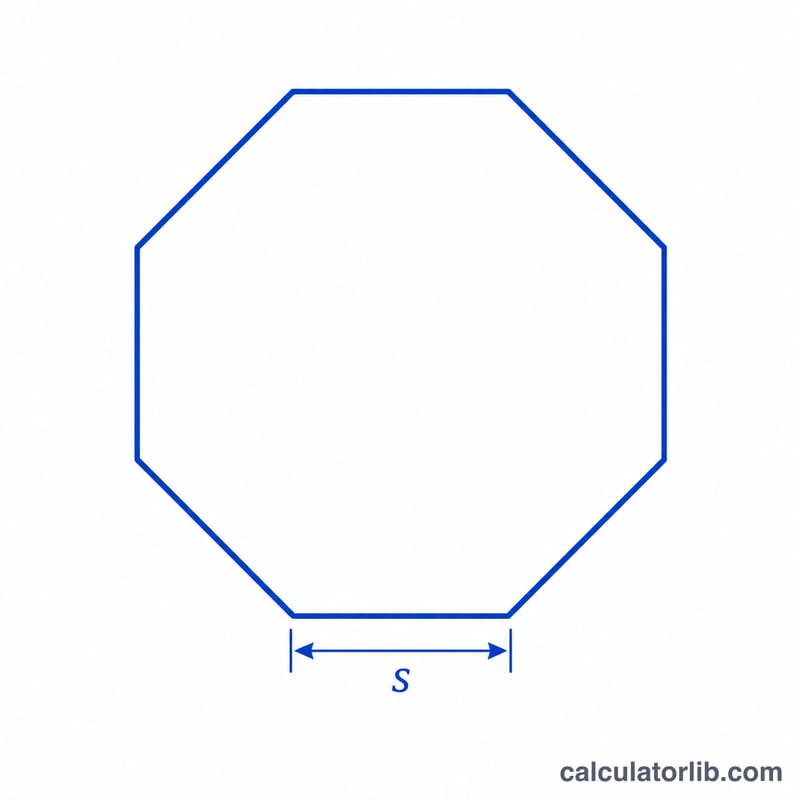
This calculator finds the area of a regular octagon — an eight-sided polygon where every side and every interior angle is equal. You enter a single value, the side length, and the tool instantly returns the area along with three useful related measurements: the perimeter, the inradius, and the circumradius. It works in whatever unit you supply (centimetres, inches, metres, etc.); the area comes back in those units squared.
How to Use It
- Side Length: Enter the length of one side of the octagon. Since the shape is regular, all eight sides are identical, so one measurement is all that's needed.
- Submit the value to see the computed area and the supporting figures.
The Formula Explained
The area of a regular octagon with side length a is:
A = 2a²(1 + √2)
The factor 2(1 + √2) ≈ 4.8284 is a fixed constant that arises from the octagon's geometry. The calculator also derives:
- Perimeter: P = 8a (eight equal sides)
- Inradius (radius of the inscribed circle): r = a(1 + √2) / 2
- Circumradius (radius of the circumscribed circle): R = a√(2 + √2) / 2
Worked Example
Suppose your octagon has a side length of 5:
- Area = 2 × 5² × (1 + √2) = 2 × 25 × 2.4142 ≈ 120.71 square units
- Perimeter = 8 × 5 = 40 units
- Inradius = 5 × (1 + √2) / 2 ≈ 6.04 units
- Circumradius = 5 × √(2 + √2) / 2 ≈ 6.53 units
Frequently Asked Questions
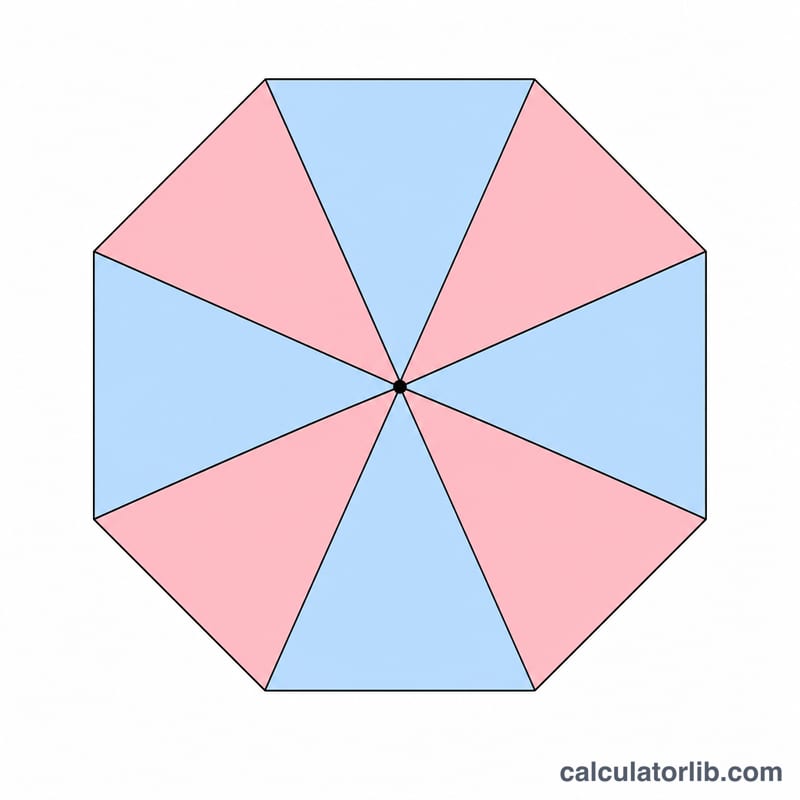
What counts as a "regular" octagon? One where all eight sides are equal in length and all eight interior angles are equal (each measures 135°). This calculator only applies to regular octagons — irregular eight-sided shapes need a different method.
Why does the formula contain √2? An octagon can be viewed as a square with its four corners cut off. Those cut corners are right-angled triangles, and the √2 term reflects the diagonal relationships in that construction, leading to the constant 2(1 + √2).
What's the difference between inradius and circumradius? The inradius is the distance from the centre to the midpoint of a side (the largest circle that fits inside), while the circumradius is the distance from the centre to a corner (the smallest circle that contains the octagon). Both are handy when fitting an octagon into other shapes or designs.