
What This Calculator Does
The Regular Polygon Area Calculator finds the area of any regular polygon — a flat shape with all sides equal in length and all interior angles equal — such as an equilateral triangle, square, regular pentagon, hexagon or octagon. You supply just two values and the tool instantly returns the area, plus several related measurements that describe the same shape.
The Inputs You Provide
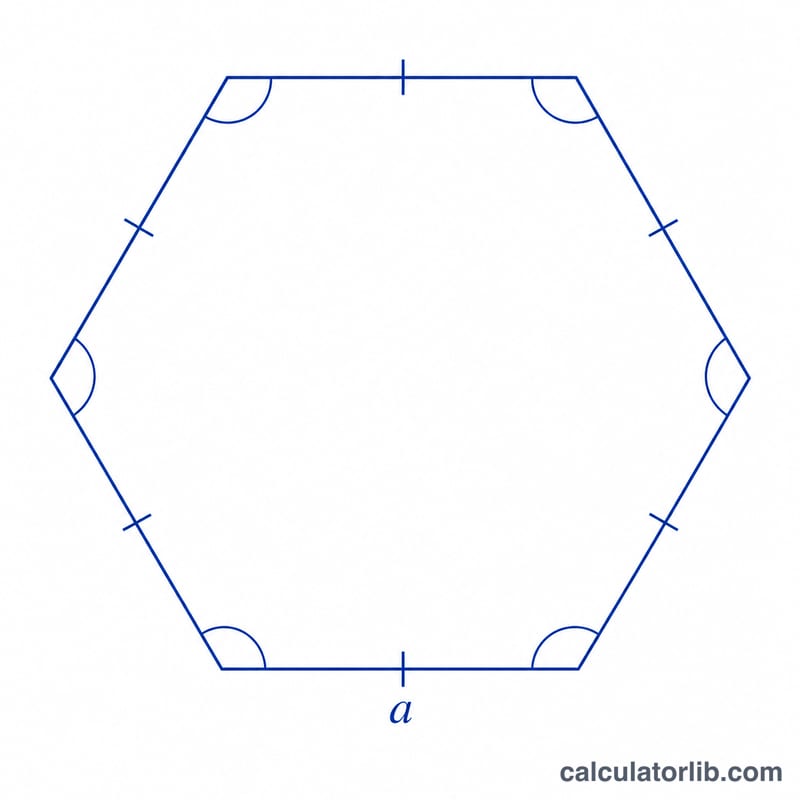
- Number of Sides (n): A whole number of 3 or more. For example, 3 for a triangle, 6 for a hexagon.
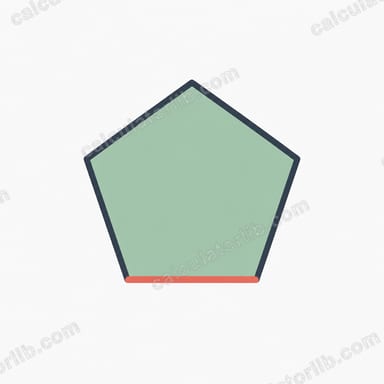
- Side Length (a): The length of one side, in whatever unit you choose (cm, m, inches, etc.). All sides are assumed equal.
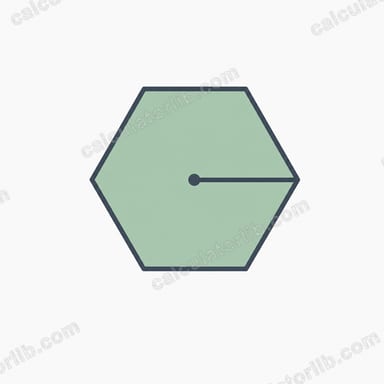
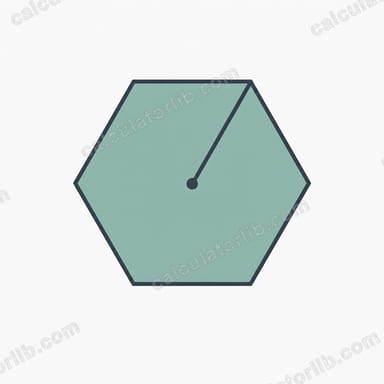
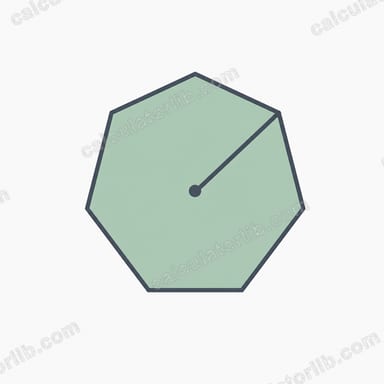
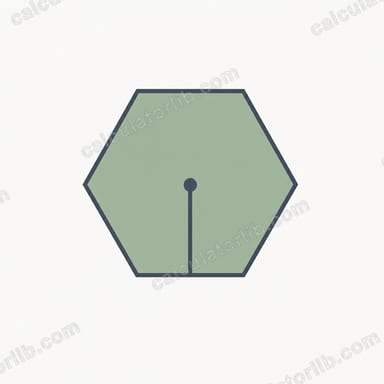
From these, the calculator returns the area, and as a bonus it also reports the perimeter, apothem (distance from the centre to the midpoint of a side), circumradius (radius of the circle that passes through every vertex) and the interior angle.
The Formula Explained
The area of a regular polygon is calculated as:
A = (n × a²) ÷ (4 × tan(180° / n))
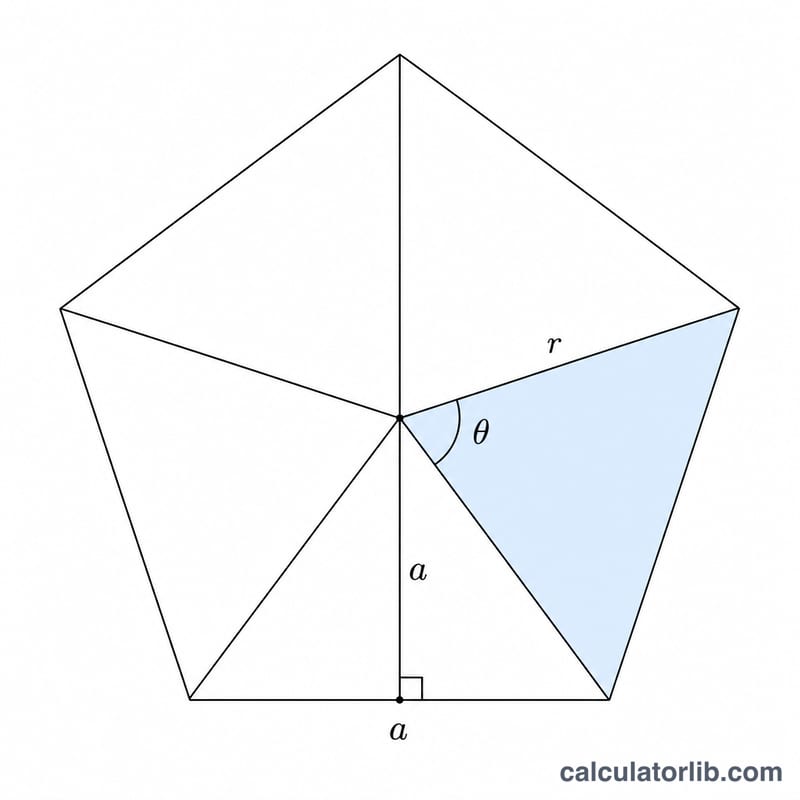
Behind the scenes, the tool does this in two intuitive steps. First it finds the apothem using a ÷ (2 × tan(π / n)). Then it computes the area as (n × a × apothem) ÷ 2 — which is the same as splitting the polygon into n identical triangles. Both approaches give an identical result.
The other outputs follow from standard geometry: perimeter = n × a, circumradius = a ÷ (2 × sin(π / n)), and interior angle = (n − 2) × 180° ÷ n.
Worked Example
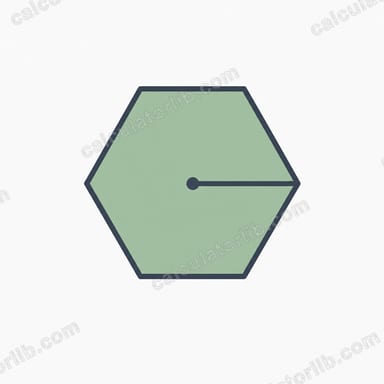
Suppose you have a regular hexagon with n = 6 and side length a = 5.
- tan(180° / 6) = tan(30°) ≈ 0.5774
- A = (6 × 5²) ÷ (4 × 0.5774) = 150 ÷ 2.3094 ≈ 64.95 square units
- Perimeter = 6 × 5 = 30 units
- Apothem ≈ 4.33 units, Circumradius = 5 units
- Interior angle = (6 − 2) × 180 ÷ 6 = 120°
Frequently Asked Questions
Does this work for irregular polygons? No. The formula assumes every side and angle is equal. For irregular shapes you would need to break the figure into triangles and sum their areas.
What is the smallest number of sides allowed? Three. A regular triangle (equilateral) is the simplest regular polygon; values below 3 do not form a closed shape.
What units does the area use? The same unit you used for the side length, squared. If you enter the side in metres, the area is in square metres.