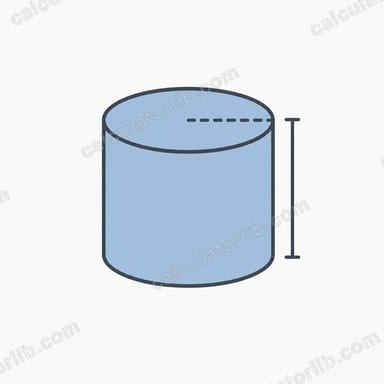

What is a tube (hollow cylinder)?
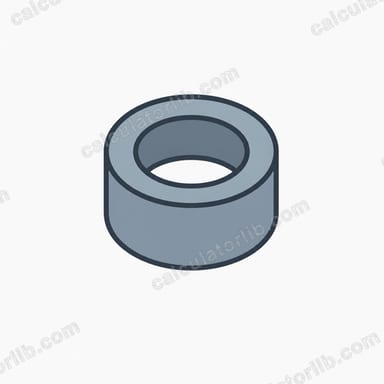
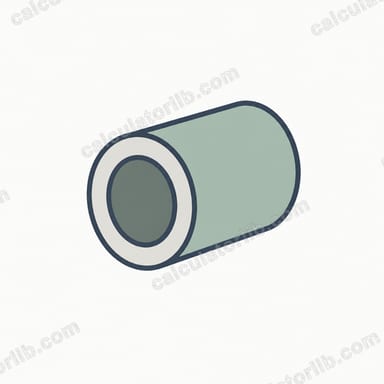
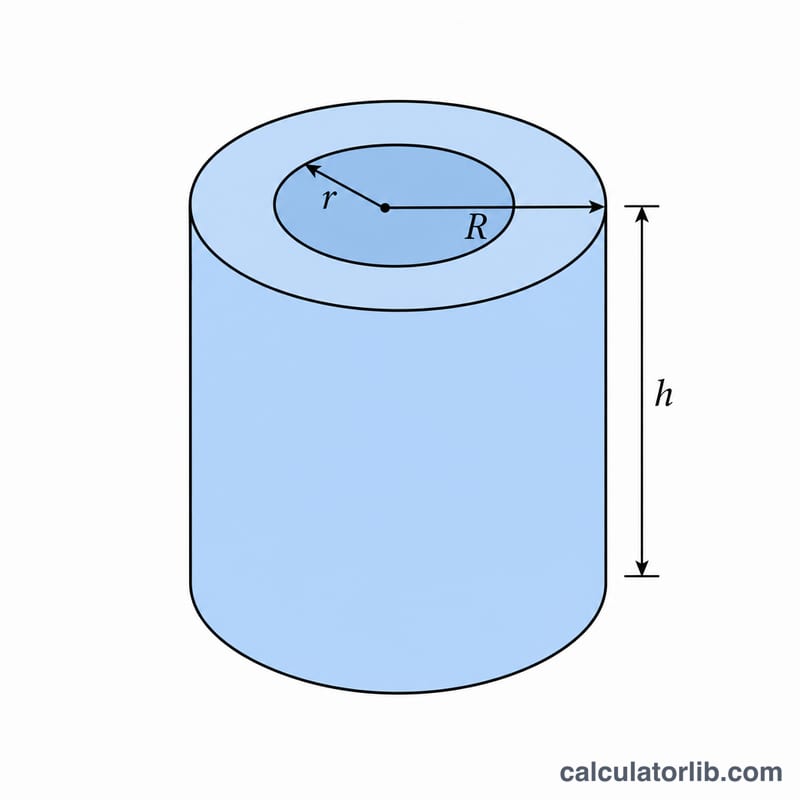
A tube, or hollow cylinder, is a cylinder with a cylindrical hole running through its centre — think of a pipe, washer, or sleeve. It is described by three measurements: the outer radius R, the inner radius r, and the height (or length) h. This calculator finds the solid volume of the material that makes up the tube, plus several useful secondary properties.
How to use this calculator
Enter the outer radius, the inner radius, and the height using the same length unit (all in cm, all in inches, etc.). The result is returned in cubic units of that same unit. The inner radius must be smaller than the outer radius for a physically valid tube.
The formula explained
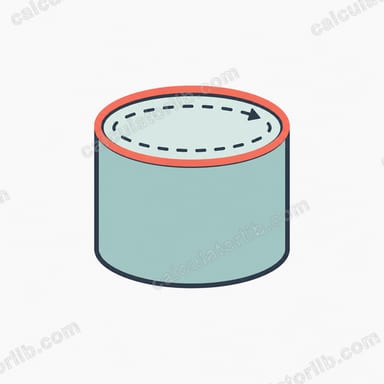
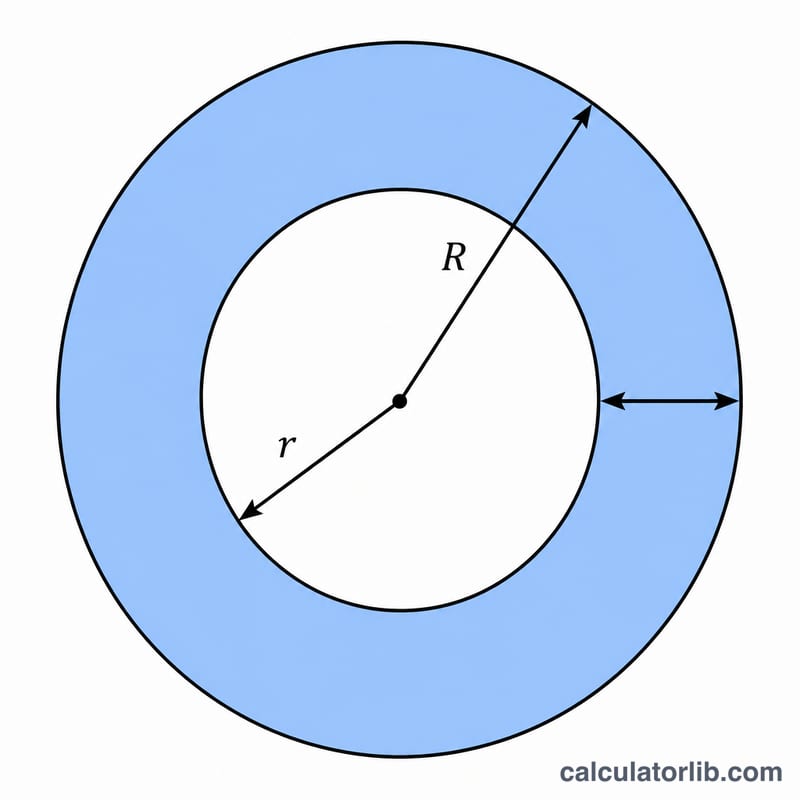
The volume equals the area of the ring-shaped cross-section multiplied by the height. The cross-section is the area of the big circle minus the area of the hole: \(\pi(R^{2} - r^{2})\). Multiply by the height to get the volume:
$$V = \pi \left( R^{2} - r^{2} \right) h$$
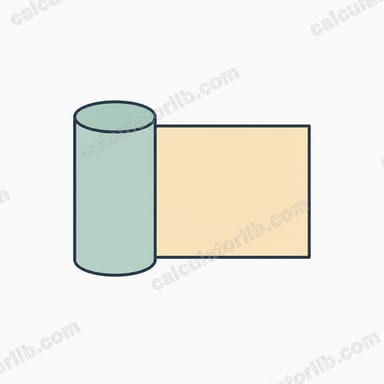
The lateral surface area combines the outer and inner walls: \(A = 2\pi(R + r)h\), and the wall thickness is simply \(R - r\).
Worked example
Suppose a pipe has an outer radius of 5 cm, an inner radius of 3 cm, and a length of 10 cm. Then \(R^{2} - r^{2} = 25 - 9 = 16\), so $$V = \pi \times 16 \times 10 \approx 502.65 \text{ cubic cm}.$$ The wall thickness is \(5 - 3 = 2\) cm.
FAQ
Can I use diameter instead of radius? No — convert first by halving each diameter, since radius = diameter ÷ 2.
What if I want the weight? Multiply the volume by the material density (mass = volume × density), keeping units consistent.
Does this work for a solid cylinder? Yes — set the inner radius to 0 and you get the standard cylinder volume \(V = \pi R^{2} h\).