
What this calculator does
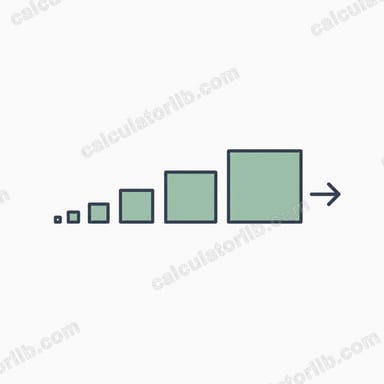
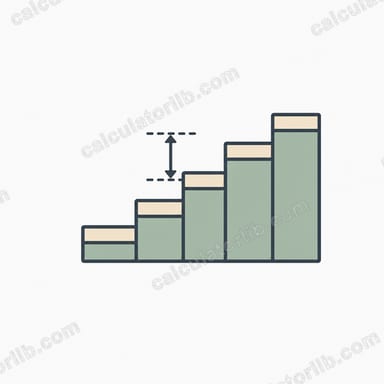
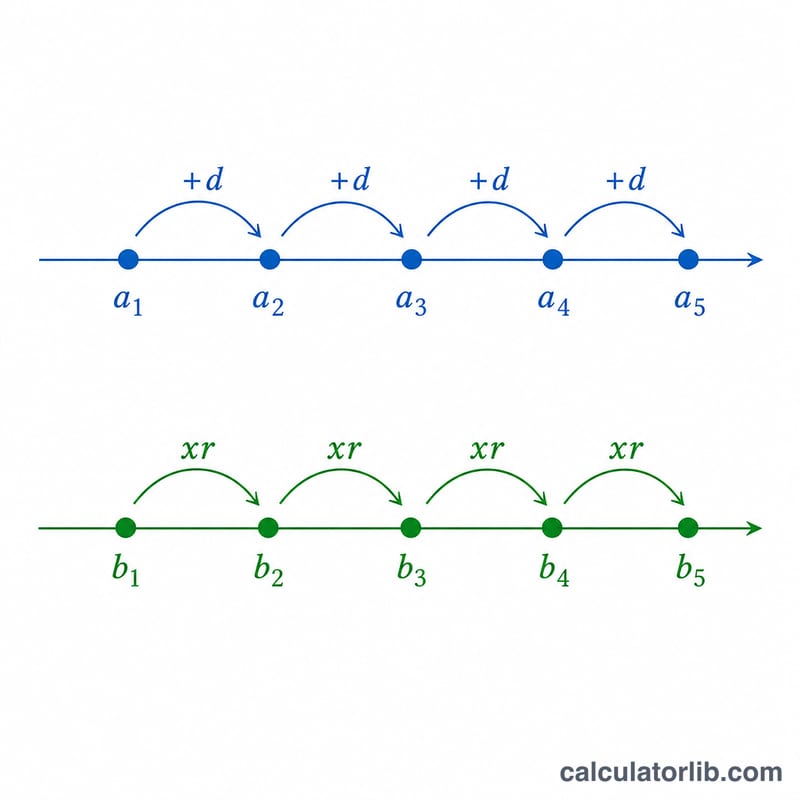
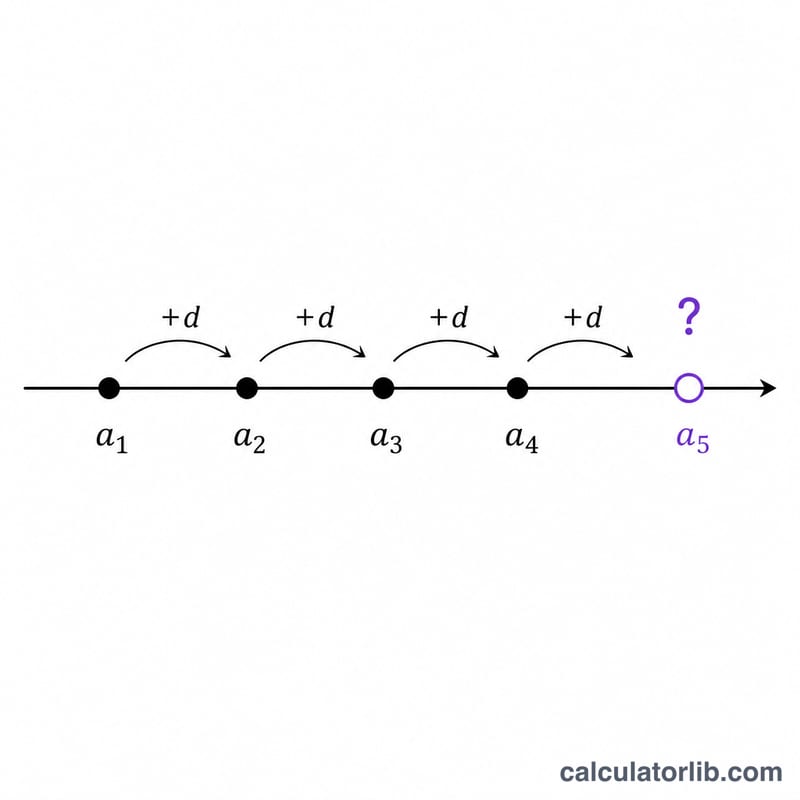
The Complete the Sequence Pattern Calculator looks at the list of numbers you enter and figures out the rule behind them. It checks two of the most common patterns in math: an arithmetic sequence, where each term grows by adding the same number (the common difference d), and a geometric sequence, where each term is multiplied by the same number (the common ratio r). Once it identifies the pattern, it extends the list and tells you the next term — or as many next terms as you ask for.
How to use it
Type your numbers separated by commas, for example 3, 7, 11, 15. Choose how many additional terms you want (1 to 20), then submit. The calculator reports the pattern type, the common difference or ratio, the very next term, and the full list of new terms it generated.
The formula explained
For an arithmetic sequence the nth term is \(a_n = a_1 + (n-1)d\), where d is the constant difference between consecutive terms. For a geometric sequence the nth term is \(a_n = a_1 \cdot r^{n-1}\), where r is the constant ratio. The calculator computes the difference and ratio between each pair of consecutive numbers; if every difference matches, the sequence is arithmetic, and if every ratio matches, it is geometric.
Worked example
Given 2, 4, 6, 8, the difference is always 2, so it is arithmetic with \(d = 2\). Adding 2 repeatedly gives the next terms 10, 12, 14. For 3, 6, 12, 24, each term doubles, so it is geometric with \(r = 2\), and the next terms are 48, 96, 192.
FAQ
What if my sequence is neither arithmetic nor geometric? The calculator reports "No simple pattern." Many sequences (like Fibonacci or quadratic series) follow more complex rules that this tool does not detect.
How many numbers do I need? At least two, but three or more gives a far more reliable pattern detection.
Can it handle decimals and negatives? Yes — both differences and ratios work with negative numbers and decimals.