
What Is the Diagonal of a Cube?
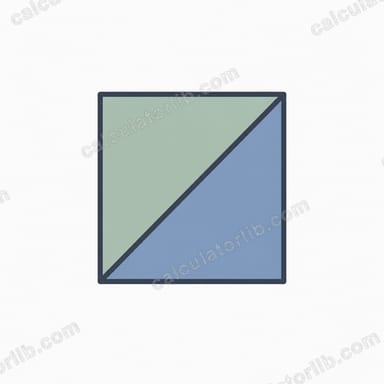
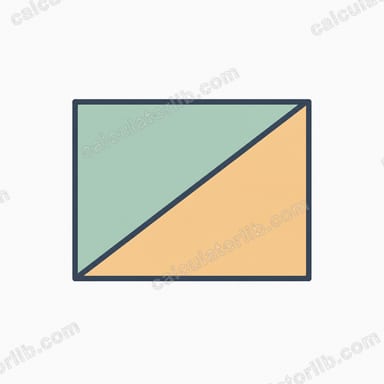
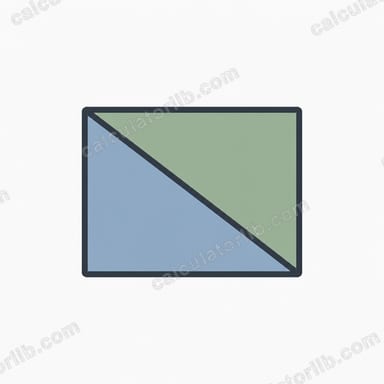
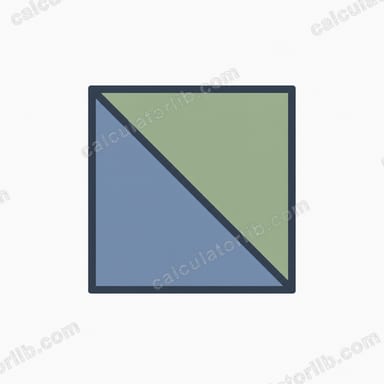
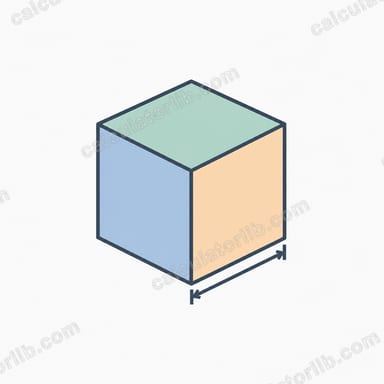
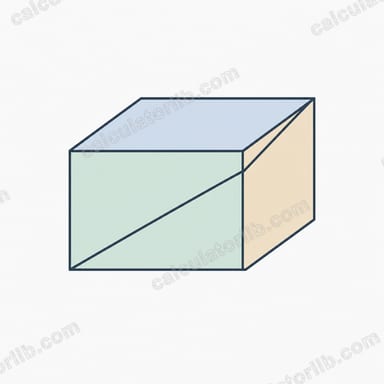
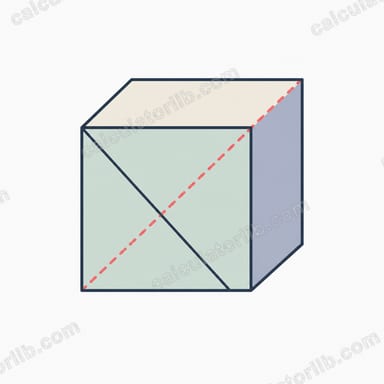
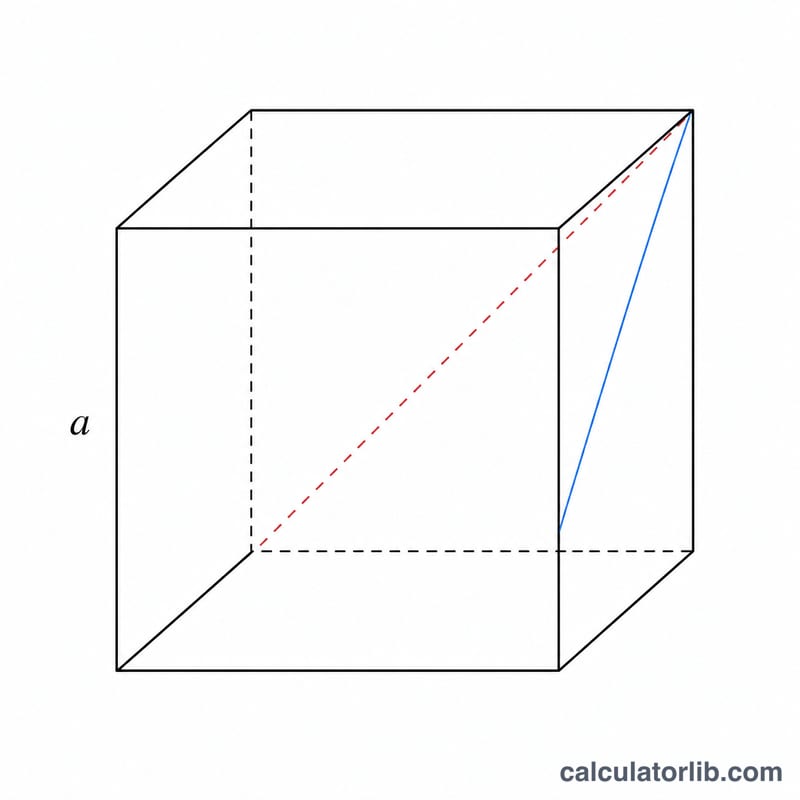
A cube has two kinds of diagonals. The face diagonal runs corner to corner across a single square face, while the space diagonal (also called the body diagonal) passes through the interior of the cube, connecting two opposite corners. This calculator finds both from a single input: the edge length a.
How to Use This Calculator
Enter the edge length of your cube — the length of any one of its sides. The tool instantly returns the space diagonal as the main result and lists the face diagonal alongside it. Use any unit you like (cm, inches, metres); the diagonals come back in the same unit.
The Formula Explained
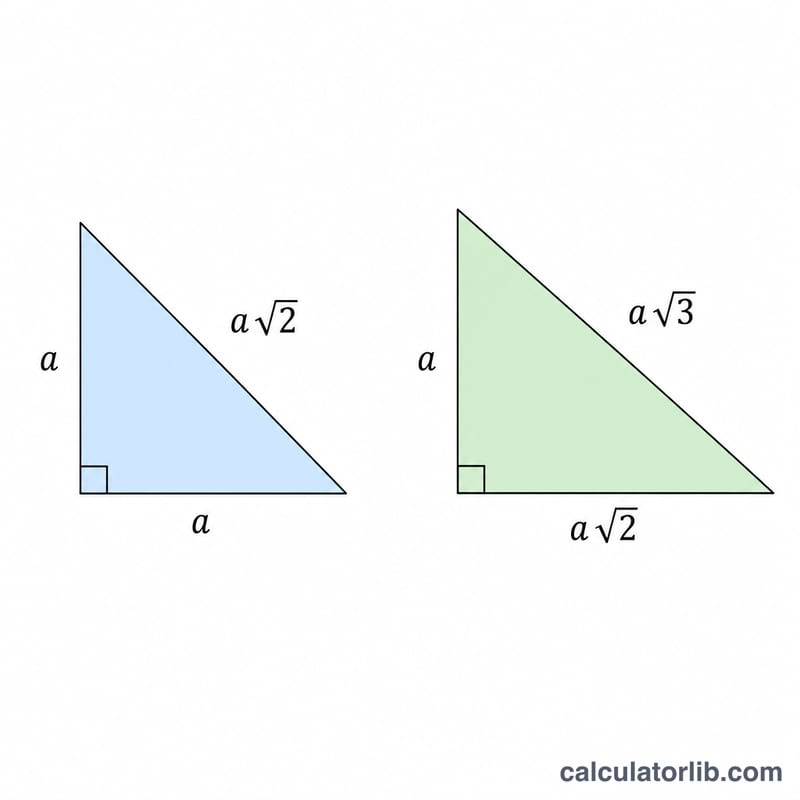
The face diagonal comes from the Pythagorean theorem applied to one square face: $$d = \sqrt{a^2 + a^2} = a\sqrt{2}$$ The space diagonal extends this into three dimensions by combining a face diagonal with the perpendicular edge: $$d = \sqrt{a^2 + a^2 + a^2} = a\sqrt{3}$$ So for any cube, the space diagonal is always \(\sqrt{3} \approx 1.732\) times the edge, and the face diagonal is \(\sqrt{2} \approx 1.414\) times the edge.
Worked Example
Suppose a cube has an edge length of 5. The face diagonal is $$5 \times \sqrt{2} = 5 \times 1.41421 \approx 7.0711$$ The space diagonal is $$5 \times \sqrt{3} = 5 \times 1.73205 \approx 8.6603$$ Both share the same units as the original edge.
FAQ
Which diagonal is longer? The space diagonal is always longer than the face diagonal, since \(\sqrt{3} > \sqrt{2}\).
Can I find the edge from a diagonal? Yes — divide a known space diagonal by \(\sqrt{3}\), or a face diagonal by \(\sqrt{2}\), to recover the edge length.
Does this work for any unit? Yes. The formulas are dimension-independent, so the output is in whatever unit you entered the edge.