
What This Kinetic Energy Calculator Does
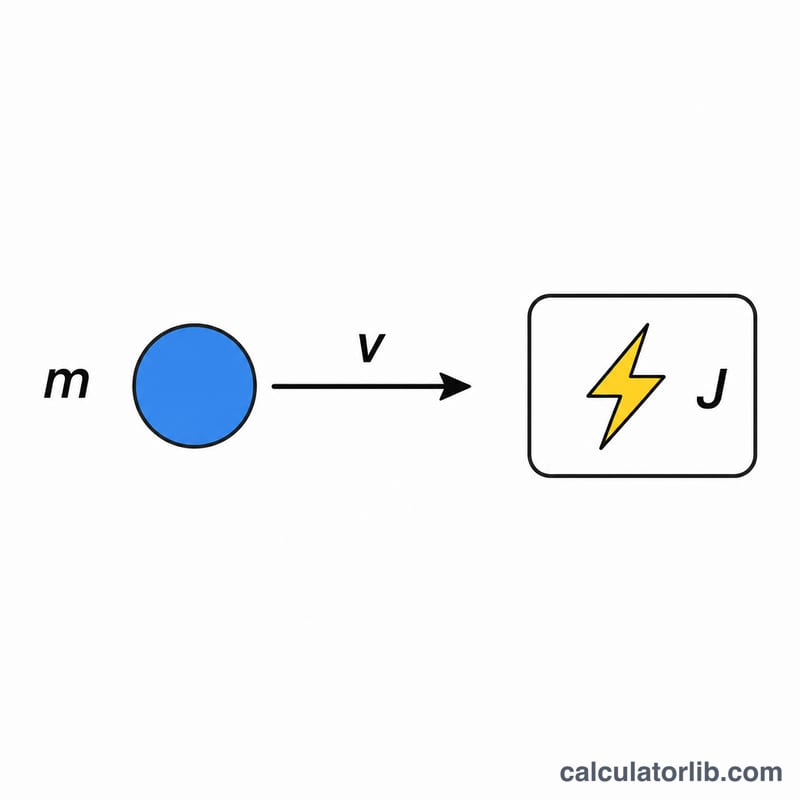
This tool calculates the kinetic energy of a moving object from two simple values: its mass and its velocity. Kinetic energy is the energy an object possesses because of its motion — the faster it moves and the heavier it is, the more energy it carries. The calculator uses SI units throughout, so you enter mass in kilograms (kg) and velocity in metres per second (m/s), and the result comes back in joules (J). It's built for physics students, lab work, homework checks, and anyone who needs a quick, reliable answer.
The Inputs You Enter
- Mass (kg): The mass of the object in kilograms. This could be a car, a ball, a bullet, or any moving body.
- Velocity (m/s): How fast the object is moving, in metres per second. If you have km/h, divide by 3.6 first to convert to m/s.
The Formula Explained
The calculator applies the standard kinetic energy equation:
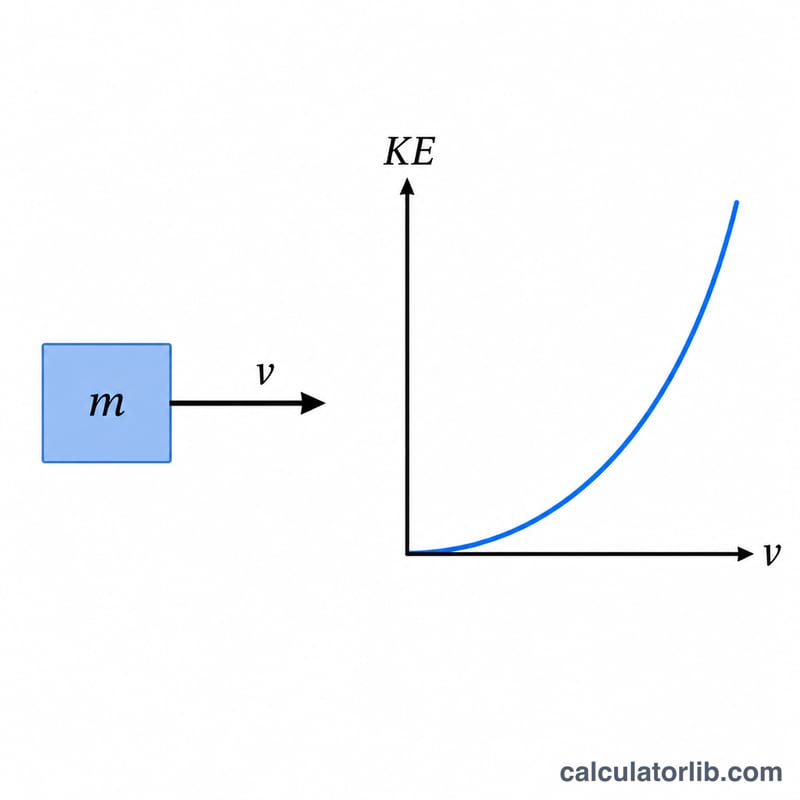
KE = ½ × m × v²
Here m is mass in kg and v is velocity in m/s. Notice that velocity is squared, so it has a much bigger effect than mass — doubling the speed multiplies the energy by four. The result is expressed in joules. Internally, the tool also draws an energy bar that fills up proportionally, reaching full width at 1000 J, giving you a quick visual sense of scale.
Worked Example
Suppose a 2 kg object moves at 10 m/s. Plugging into the formula:
- KE = 0.5 × 2 × (10 × 10)
- KE = 0.5 × 2 × 100
- KE = 100 joules
Now increase the velocity to 20 m/s while keeping the mass the same: KE = 0.5 × 2 × 400 = 400 J. The mass stayed identical, but the energy quadrupled because velocity is squared.
Frequently Asked Questions
What units does the result use? The answer is always in joules (J), the SI unit of energy, because you enter mass in kg and velocity in m/s.
Why does speed matter more than mass? Because velocity is squared in the formula. A small increase in speed produces a large increase in kinetic energy, which is why crash energy rises so sharply with vehicle speed.
Can I use it for any object? Yes — anything with mass and motion, from a thrown ball to a moving train. Just convert your figures to kilograms and metres per second first.