
What the Ovulation Calculator Does
This Ovulation Calculator estimates the day you are most likely to ovulate, your fertile window, and the date of your next expected period. It is built on the standard "luteal phase" method used worldwide and works the same regardless of country. By entering just two pieces of information, you get four useful dates back: your ovulation date, the start and end of your fertile window, and when your next period is due.
The Inputs You Provide
- Last Period Start Date — the first day of your most recent period (the day bleeding began, not when it ended).
- Average Cycle Length (days) — the typical number of days from the first day of one period to the first day of the next. If you leave this blank, the calculator defaults to 28 days.
The Formula Explained
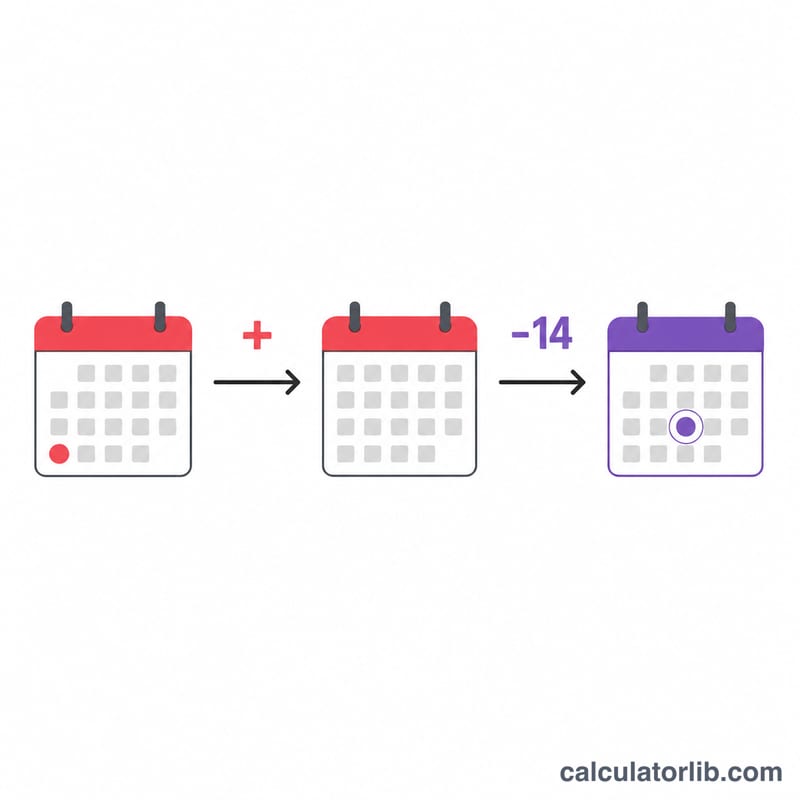
The calculator assumes the luteal phase (the time between ovulation and the next period) is a fairly fixed 14 days. So it works backwards from your next expected period:
$$\text{Ovulation Date} = \text{Last Period Date} + \left( \text{Cycle Length} - 14 \right)$$
From the ovulation date, it then derives the rest:
- Fertile window start = ovulation date \(-\) 5 days (sperm can survive several days)
- Fertile window end = ovulation date \(+\) 1 day
- Next period = Last Period Date + Cycle Length
Worked Example
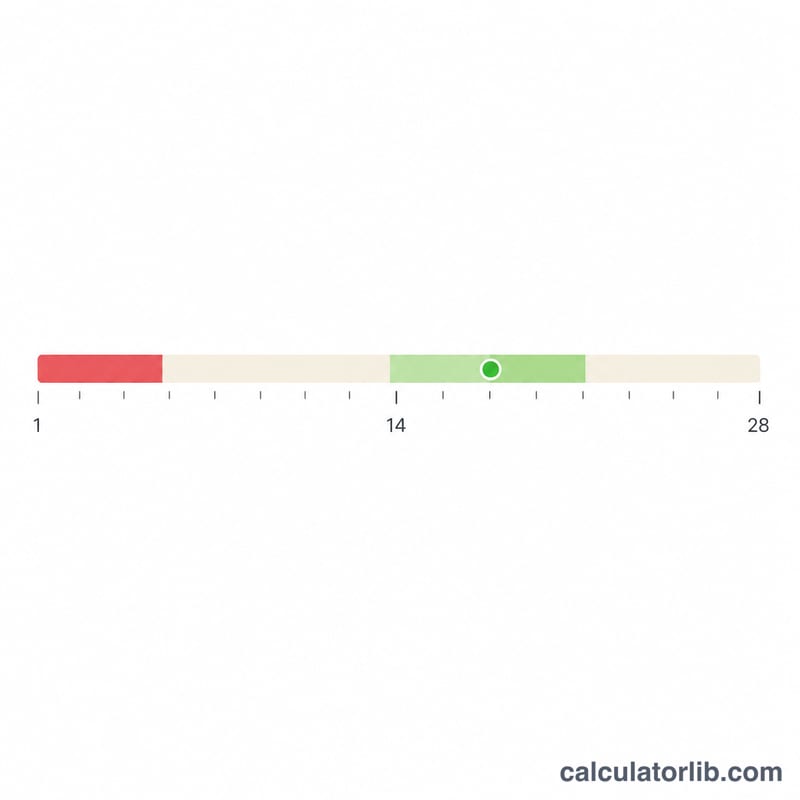
Suppose your last period started on March 1, 2024 and your average cycle is 30 days.
- $$\text{Ovulation} = \text{March 1} + (30 - 14) = \text{March 1} + 16 \text{ days} = \textbf{March 17, 2024}$$
- Fertile window = March 12 to March 18, 2024
- $$\text{Next period} = \text{March 1} + 30 \text{ days} = \textbf{March 31, 2024}$$
This tells you that intercourse between March 12 and March 18 gives the highest chance of conception.
Frequently Asked Questions
How accurate is this calculator? It gives a solid estimate for people with regular cycles. Because real ovulation can shift by a few days, combine it with ovulation tests or basal body temperature tracking for greater precision.
Can I use it as birth control? Not reliably. Ovulation timing varies and sperm can survive up to five days, so this tool should not be relied on alone to avoid pregnancy.
What if my cycle length changes each month? Use the average of your last few cycles. Very irregular cycles make the prediction less reliable, so consider speaking with a healthcare provider.