
What Is Relative Frequency?
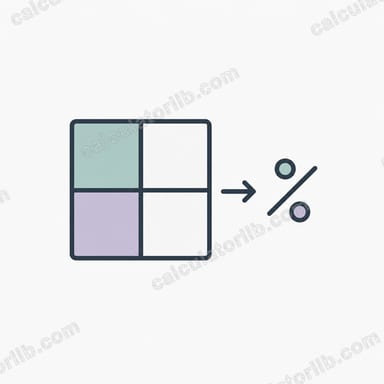
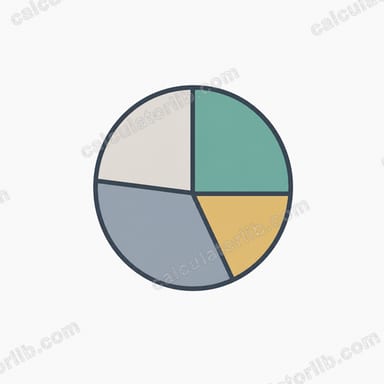
Relative frequency tells you how often a particular value or category (a "class") occurs compared to the total number of observations in a data set. Instead of a raw count, it expresses the count as a fraction or proportion of the whole, which makes it easy to compare classes of different sizes or to compare data sets that have different totals.
How to Use This Calculator
Enter two numbers: the class frequency (how many times the class appears) and the total observations (the size of the entire data set). The calculator divides the first by the second and returns both the proportion (a number between 0 and 1) and the equivalent percentage.
The Formula Explained
The relative frequency is simply:
$$\text{Relative Frequency} = \frac{\text{Class Frequency}}{\text{Total Observations}} \times 100\%$$
Multiply the result by 100 to convert it into a percentage. If you add up the relative frequencies of every class in a data set, they should sum to exactly 1 (or 100%).
Worked Example
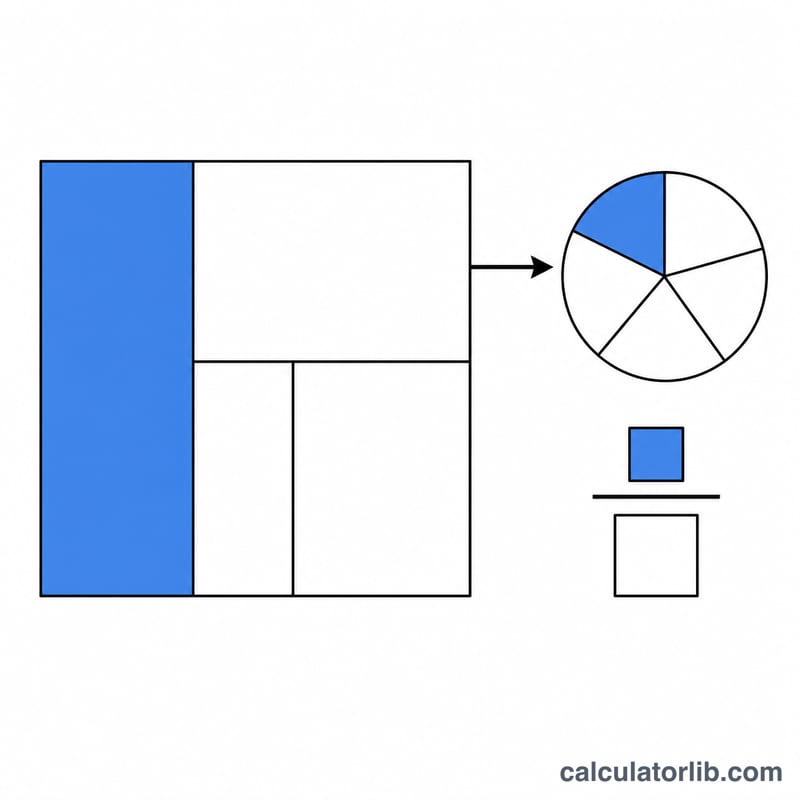
Suppose 60 students were surveyed and 15 of them chose pizza as their favorite food. The relative frequency of "pizza" is $$15 \div 60 = 0.25,$$ which is 25%. So a quarter of the students prefer pizza.
FAQ
What is the difference between frequency and relative frequency? Frequency is a raw count of how many times something occurs. Relative frequency divides that count by the total, giving a proportion that can be compared across data sets.
Can relative frequency be greater than 1? No. Because the class frequency cannot exceed the total observations, the result always falls between 0 and 1 (0% to 100%).
How is relative frequency used in probability? The relative frequency of an event over many trials is an empirical estimate of that event's probability — the more trials, the closer it tends to the true probability.