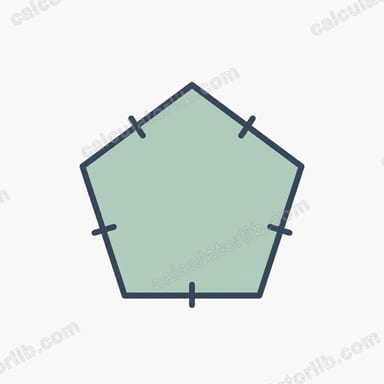

What Is the Perimeter of a Polygon?
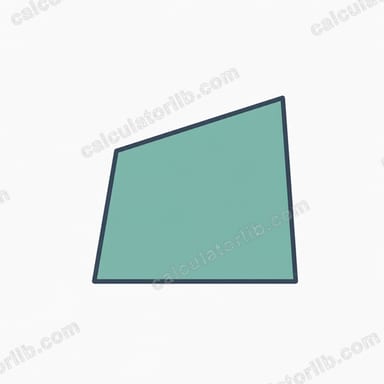
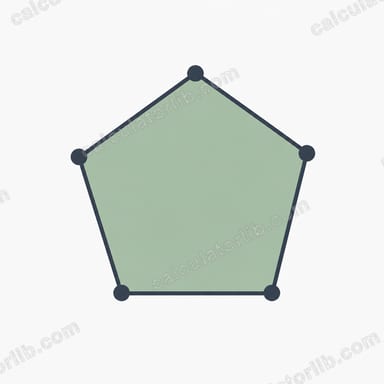
The perimeter of a polygon is the total distance around its outer boundary — the sum of the lengths of all its sides. Whether you are fencing a garden, framing a picture, or solving a geometry problem, knowing the perimeter is essential. This calculator handles both regular polygons (where every side is the same length) and irregular polygons (where sides differ).
How to Use This Calculator
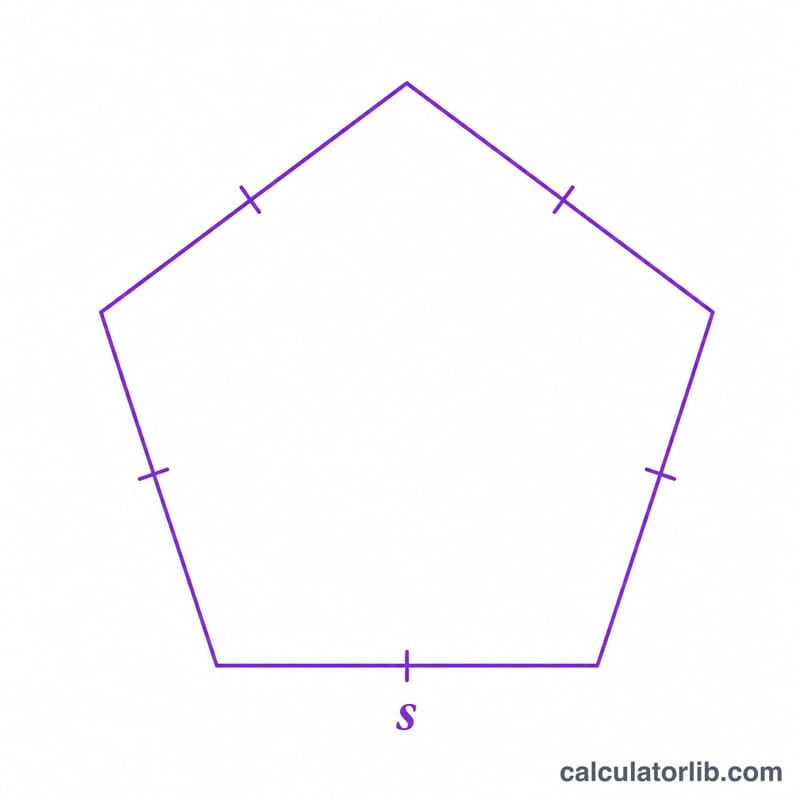
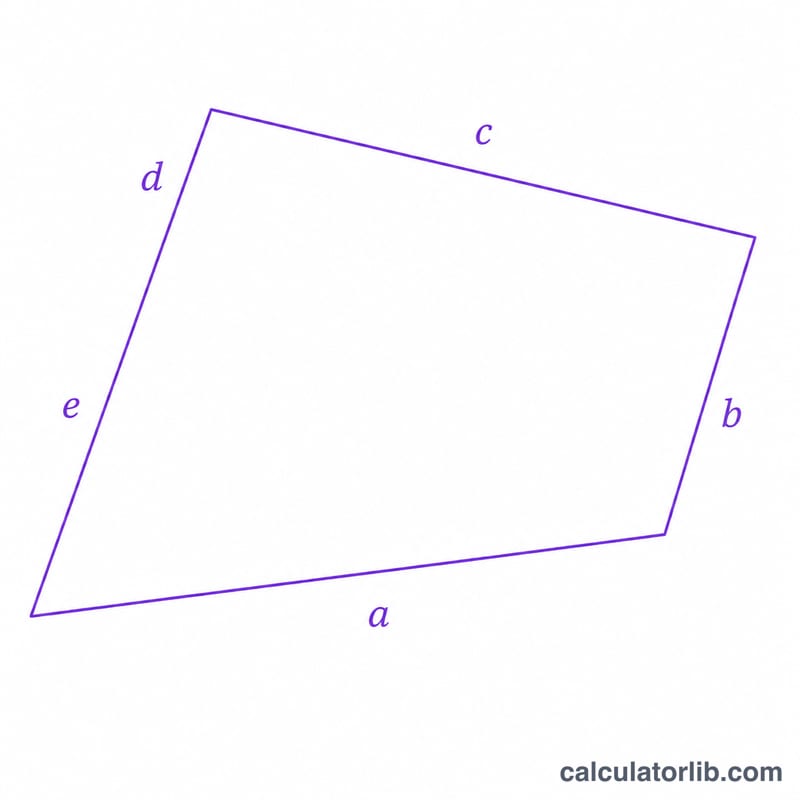
Choose your polygon type. For a regular polygon, enter the number of sides and the length of one side — the calculator multiplies them together. For an irregular polygon, type each side length separated by commas (for example 3, 4, 5) and the calculator adds them all. The result shows the total perimeter, the number of sides counted, and the average side length.
The Formula Explained
For a regular polygon the perimeter is simply $$P = n \times s$$ where n is the number of sides and s is the length of each side. Because all sides are identical, one multiplication does the job. For an irregular polygon there is no shortcut: $$P = s_1 + s_2 + \dots + s_n$$ the straightforward sum of every individual side length.
Worked Example
Consider a regular hexagon with 6 sides, each 6 units long. The perimeter is $$P = 6 \times 6 = 36 \text{ units}$$ Now consider an irregular triangle with sides 3, 4 and 5. Its perimeter is $$3 + 4 + 5 = 12 \text{ units}$$ with an average side length of \(4\).
FAQ
Does the polygon need to be convex? No. The perimeter is the sum of side lengths regardless of whether the shape is convex or concave.
What units does the result use? The result is in the same units you enter — centimeters, meters, inches, feet, etc. Just keep your inputs consistent.
Can I mix the two methods? Use regular mode only when all sides are equal; otherwise use irregular mode and list each side, which always works.