
What Is the Volume of a Prism?
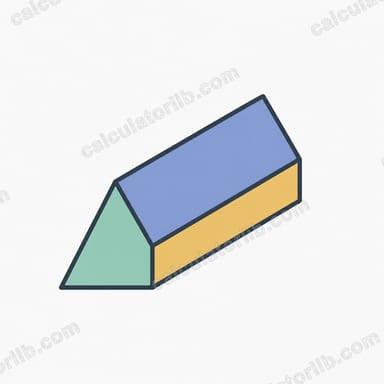
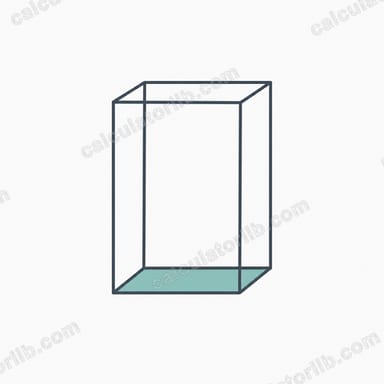
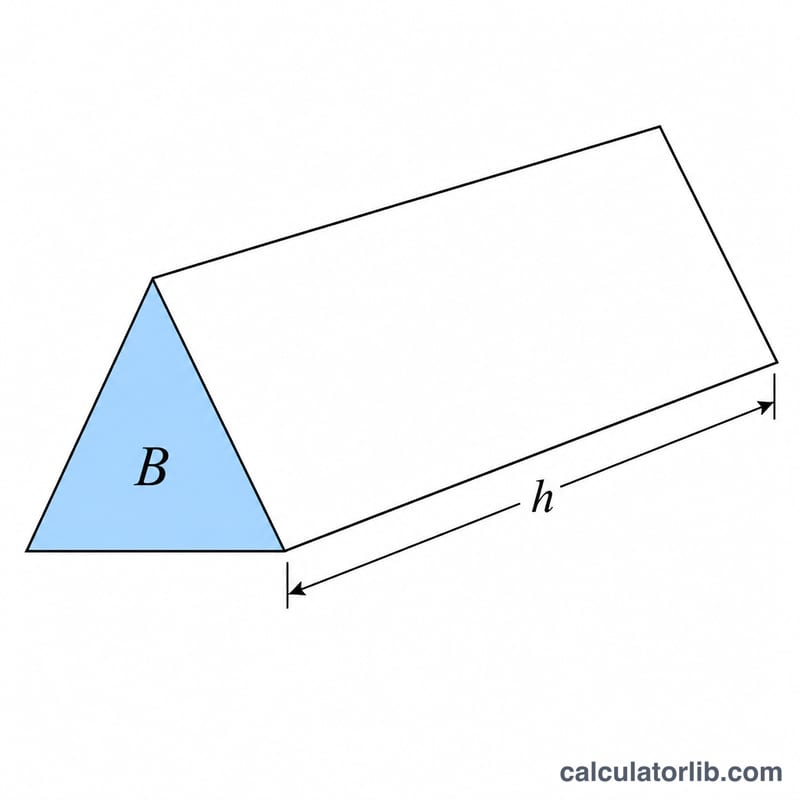
A prism is a solid with two identical, parallel polygonal faces (the bases) connected by flat rectangular sides. Its volume measures how much space it occupies. Because every cross-section parallel to the base is identical, the volume is simply the area of that base multiplied by the distance between the two bases — the height (also called the length).
How to Use This Calculator
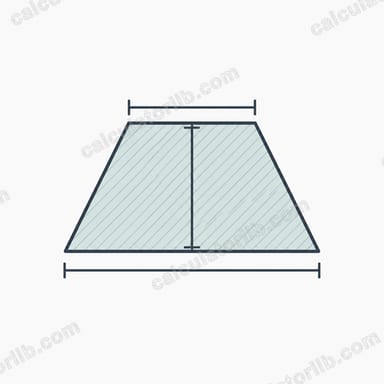
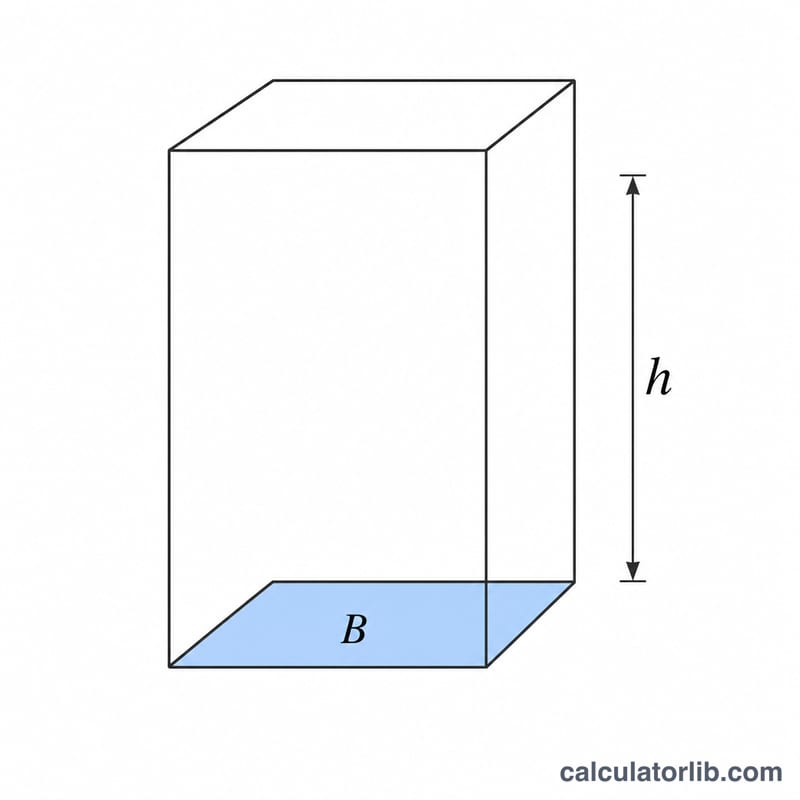
Enter the base area (B) — the area of the prism's cross-section — and the height (h), the perpendicular distance between the two bases. The calculator returns the volume in cubic units. Keep both inputs in the same unit system: if the base area is in square centimetres and the height in centimetres, the volume is in cubic centimetres.
The Formula Explained
The governing equation is:
$$V = \text{Base Area (B)} \times \text{Height (h)}$$
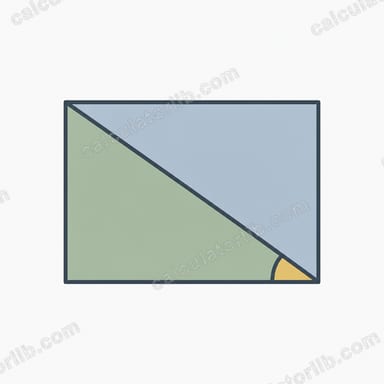
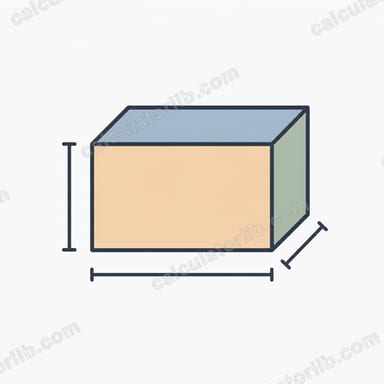
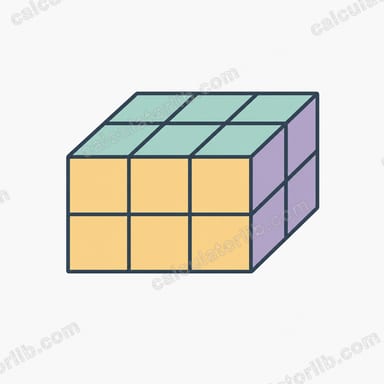
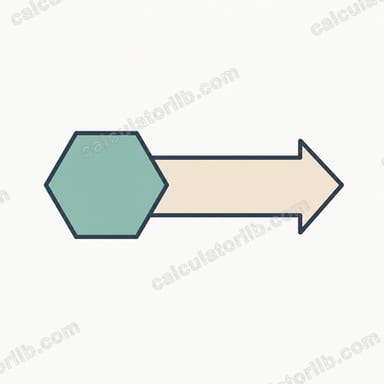
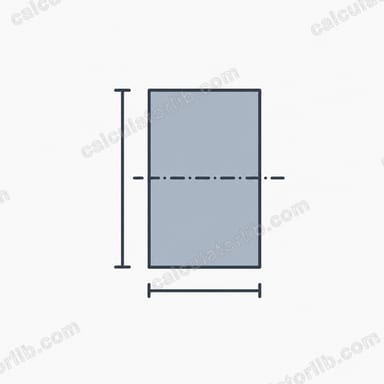
where V is the volume, B is the cross-sectional base area, and h is the height. This single formula works for every prism — triangular, rectangular, pentagonal, hexagonal or any polygonal base — as long as you supply the correct base area. For a rectangular prism (box) you might compute B as \(\text{length} \times \text{width}\) first; for a triangular prism, \(B = \tfrac{1}{2} \times \text{base} \times \text{triangle-height}\).
Worked Example
Suppose a triangular prism has a base cross-section of 12 square units and a height of 5 units. The volume is $$V = 12 \times 5 = 60 \text{ cubic units}.$$ Double the height to 10 and the volume doubles to 120 cubic units, because volume scales linearly with height.
FAQ
Does this work for cylinders? Yes. A cylinder is effectively a prism with a circular base — use \(B = \pi r^2\) as the base area and the same \(V = B \times h\) applies.
What units does it return? Cubic units that match your inputs. If B is in m² and h in m, the result is in m³.
Is height the same as the base side? No. Height here is the distance between the two parallel bases, measured perpendicular to them — not a side length of the base polygon.