
What is the TIMI Risk Score for UA/NSTEMI?
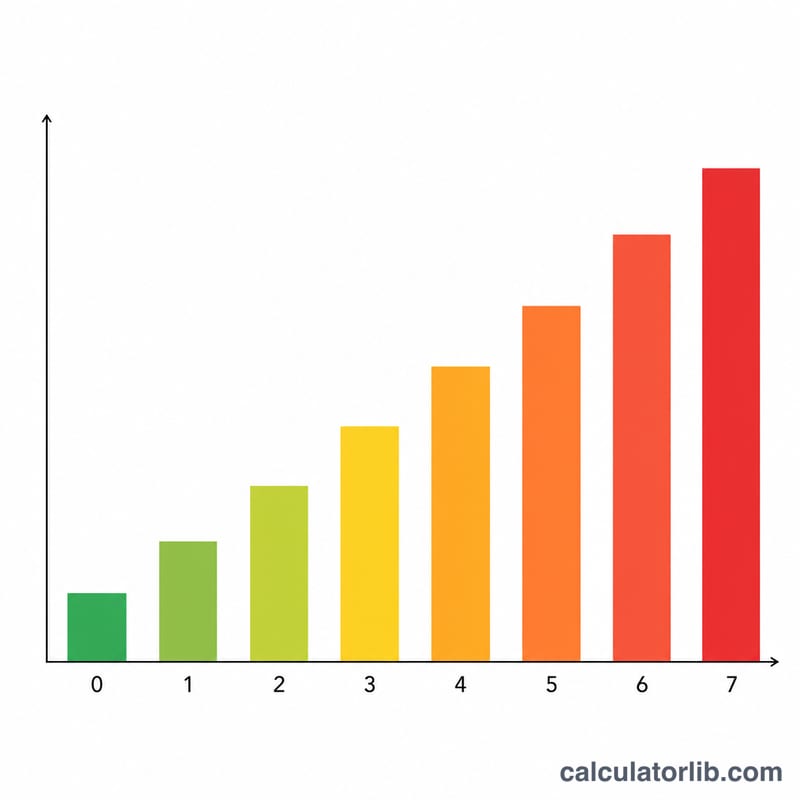
The Thrombolysis in Myocardial Infarction (TIMI) Risk Score for Unstable Angina/Non-ST-Elevation Myocardial Infarction is a validated bedside tool that stratifies patients presenting with acute coronary syndromes. Derived from the TIMI 11B and ESSENCE trials, it predicts the 14-day risk of a composite endpoint: all-cause mortality, new or recurrent myocardial infarction, or severe recurrent ischemia requiring urgent revascularization.
How to use this calculator
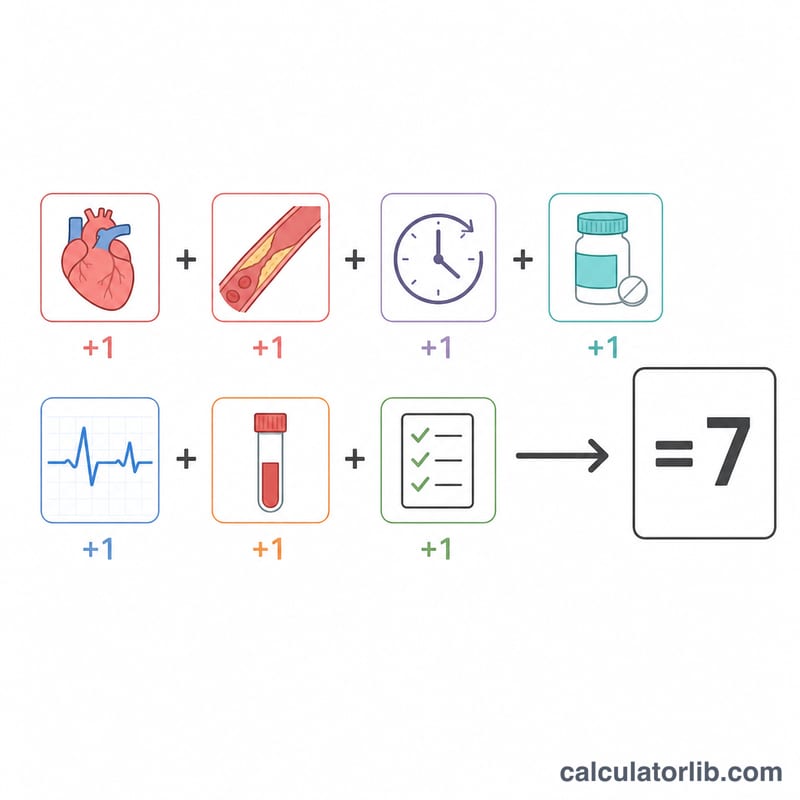
Check each box that applies to your patient. Each present factor contributes exactly 1 point, for a total possible score of 0 to 7. The calculator instantly sums the points, maps them to the expected 14-day event rate, and assigns a low, intermediate, or high risk category to guide management decisions such as the urgency of an invasive strategy.
$$\text{TIMI} = \text{Age} \ge 65 + \text{3+ Risk Factors} + \text{Known CAD} + \text{Aspirin Use} + \text{Severe Angina} + \text{ST Deviation} + \text{Cardiac Markers}$$
The seven factors
1) Age \(\ge 65\) years. 2) At least 3 risk factors for coronary artery disease (hypertension, hypercholesterolemia, diabetes, family history, current smoking). 3) Known coronary artery disease (stenosis \(\ge 50\%\)). 4) Aspirin use in the prior 7 days. 5) Severe angina (\(\ge 2\) episodes within 24 hours). 6) ST-segment deviation \(\ge 0.5\) mm. 7) Elevated cardiac biomarkers (troponin or CK-MB).
Worked example
A 70-year-old patient with diabetes, hypertension, and a smoking history (\(\ge 3\) CAD risk factors), a known prior stent, and a positive troponin has age (1) + CAD risk factors (1) + known CAD (1) + positive marker (1) = a score of 4, corresponding to an intermediate risk category with an estimated 14-day event rate of about 19.9%.
$$1 + 1 + 1 + 1 = 4$$
FAQ
What score is considered high risk? A score of 5–7 indicates high risk and generally favors an early invasive strategy.
Does aspirin use raise the score? Yes — paradoxically, recent aspirin use scores a point because it identifies patients with ischemia despite antiplatelet therapy, a marker of more severe disease.
Is this score diagnostic? No. It is a prognostic risk-stratification aid and should always be combined with clinical judgment, the full ECG, and biomarker trends.