
What this calculator does
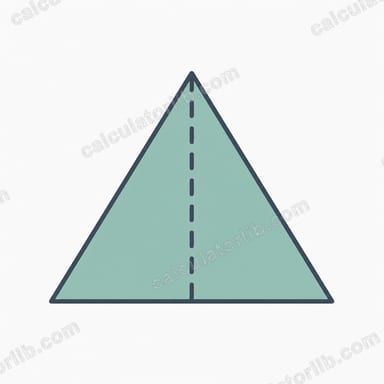
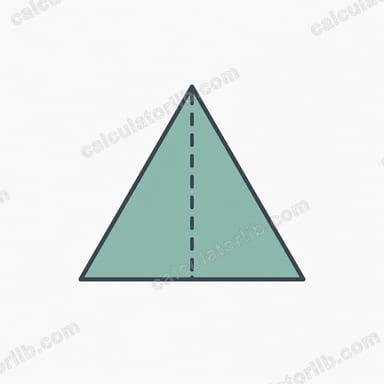
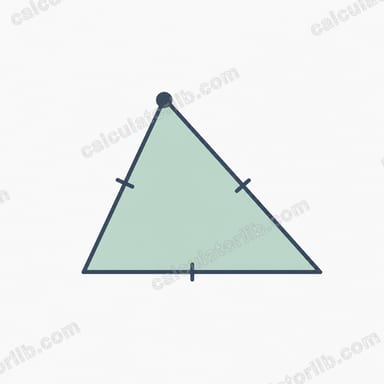
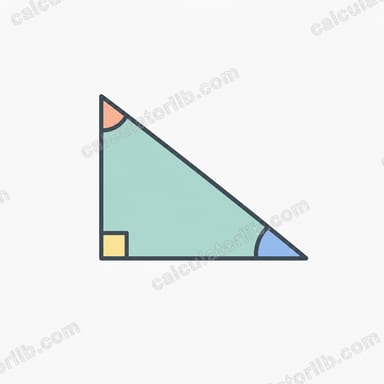
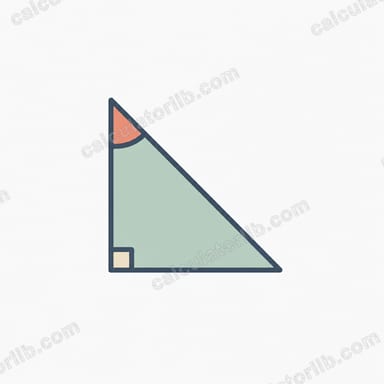
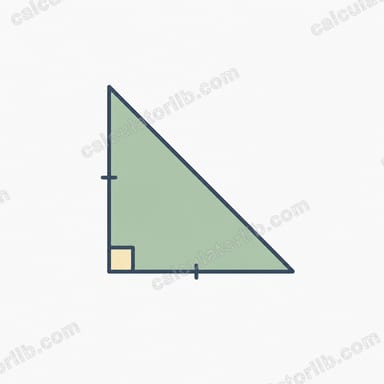
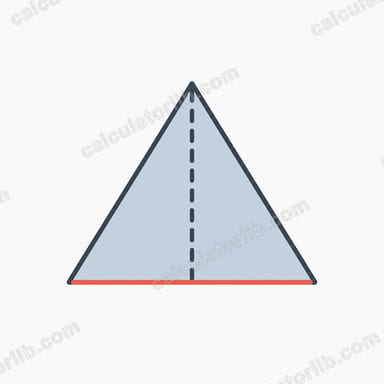
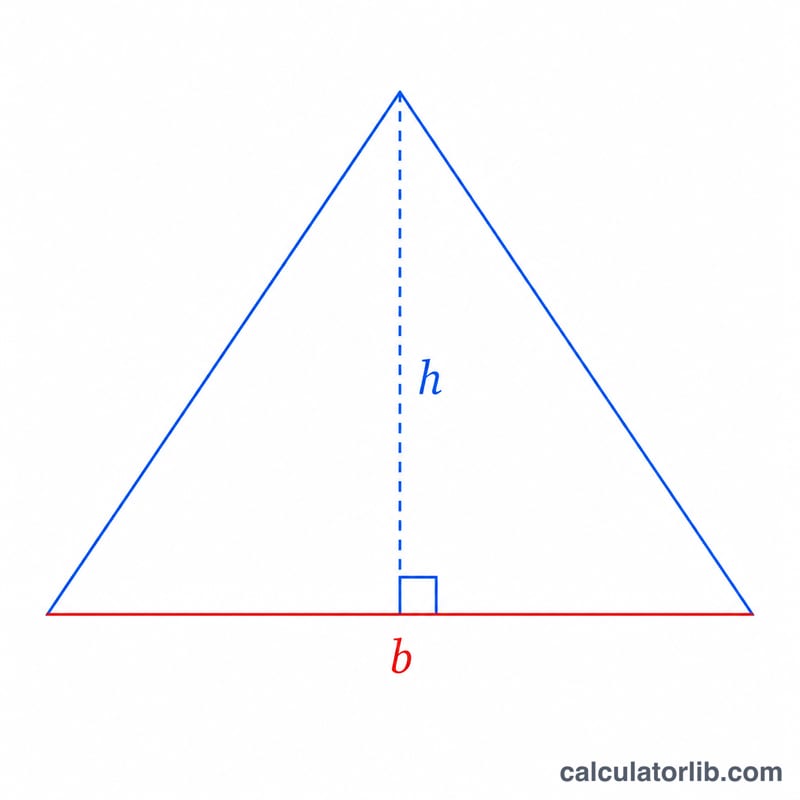
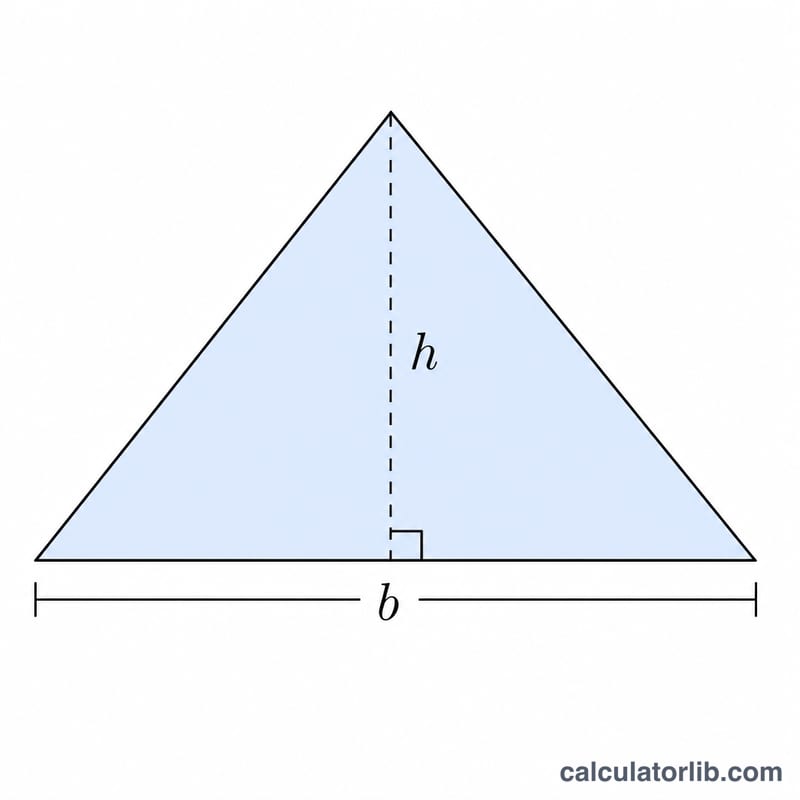
This tool finds the base of a triangle when you already know its area and its height (the perpendicular distance from the base to the opposite vertex). It works for any triangle, since every triangle's area follows the same simple relationship between base and height.
The formula
The standard area of a triangle is \(A = \frac{1}{2} \times \text{base} \times \text{height}\). Solving that equation for the base gives:
$$\text{base} = \frac{2 \times \text{Area}}{\text{height}}$$
Make sure the area and the height use consistent units. If the area is in square centimetres and the height is in centimetres, the resulting base will be in centimetres.
How to use it
Enter the area of the triangle and the height that is measured perpendicular to the base you want to find. Press calculate and the tool returns the base length. The height must be greater than zero — a triangle with zero height has no area.
Worked example
Suppose a triangle has an area of 50 cm² and a height of 10 cm. Then $$\text{base} = \frac{2 \times 50}{10} = \frac{100}{10} = 10 \text{ cm}.$$ So the base is 10 cm long.
FAQ
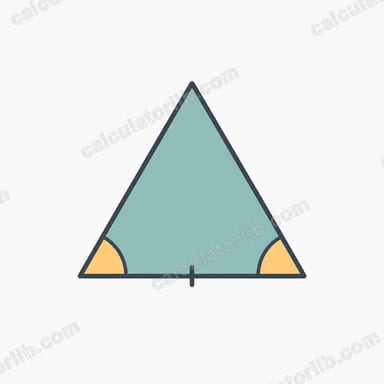
Does the type of triangle matter? No. The formula \(\text{base} = \frac{2A}{h}\) applies to scalene, isosceles, right, and equilateral triangles alike.
What height should I use? Use the perpendicular height that corresponds to the base you are solving for — the straight-line distance from that base to the opposite vertex.
What units does the answer use? The base shares the same length unit as the height, provided the area is expressed in the square of that unit (e.g. m² with m gives m).