透過 MCP 連接 →

輸入計算

數學公式

廣告

結果

First value yv(x) (order v = 0)
-4.900333
第二類球貝索函數
x yv(x)
0.0000 undefined
0.2000 -4.900333
0.4000 -2.302652
0.6000 -1.375559
0.8000 -0.870883
1.0000 -0.540302
1.2000 -0.301965
1.4000 -0.121405
1.6000 0.018250
1.8000 0.126223
2.0000 0.208073
2.2000 0.267501
2.4000 0.307247
2.6000 0.329573
2.8000 0.336508
3.0000 0.329997
3.2000 0.311967
3.4000 0.284352
3.6000 0.249100
3.8000 0.208149
4.0000 0.163411
4.2000 0.116729
4.4000 0.069848
4.6000 0.024381
4.8000 -0.018229
5.0000 -0.056732
5.2000 -0.090099
5.4000 -0.117536
5.6000 -0.138494
5.8000 -0.152676
6.0000 -0.160028
6.2000 -0.160733
6.4000 -0.155185
6.6000 -0.143975
6.8000 -0.127853
7.0000 -0.107700
7.2000 -0.084493
7.4000 -0.059263
7.6000 -0.033061
7.8000 -0.006917
8.0000 0.018188
8.2000 0.041360
8.4000 0.061820
8.6000 0.078921
8.8000 0.092170
9.0000 0.101237
9.2000 0.105961
9.4000 0.106350
9.6000 0.102572
9.8000 0.094941
10.0000 0.083907

什麼是第二類球貝索函數?

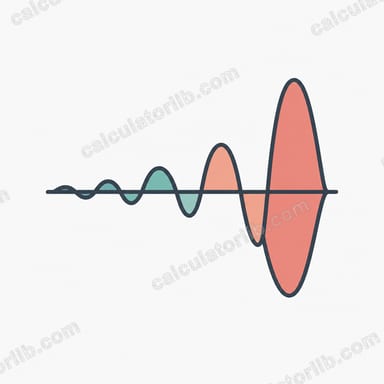
第二類球貝索函數記作 \(y_v(x)\),是球貝索微分方程 \(x^2 w'' + 2x w' + (x^2 - v(v+1))w = 0\) 的一組解。它在物理學中應用極廣——舉凡散射理論、量子力學(自由粒子的徑向薛丁格方程),以及具有球對稱性的電磁波與聲波問題,都會見到它的身影。與第一類函數 \(j_v(x)\) 不同,第二類函數 \(y_v(x)\) 在 \(x\) 趨近於 0 時會發散至負無窮大。
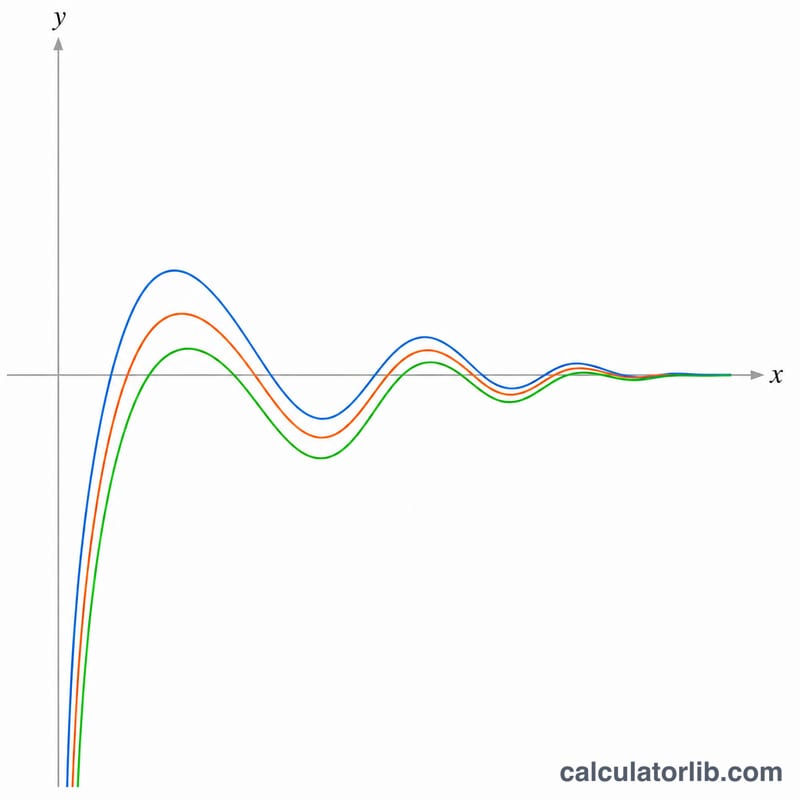
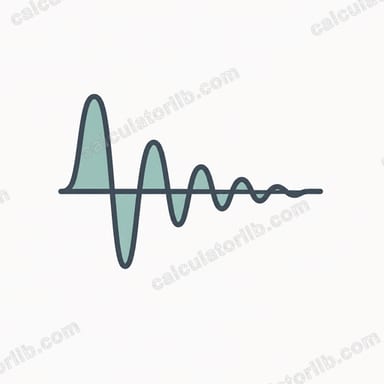
Oscillating decaying curves of spherical Bessel functions of the second kind diverging near x=0
Spherical Bessel functions of the second kind y_v(x) for orders v=0,1,2, showing the singularity as x approaches 0 and decaying oscillations.

如何使用本計算器

請輸入階數 \(v\)(可為任意實數,但最常用的是較小的非負整數)、\(x\) 的起始值、相鄰兩個 \(x\) 之間的間距(步長),以及要產生的列數。本工具會建立 \(x\) 與 \(y_v(x)\) 的數值表,並繪製對應圖形。由於 \(x = 0\) 為奇異點,凡 \(x \le 0\) 的列都會標示為「未定義」。

計算公式

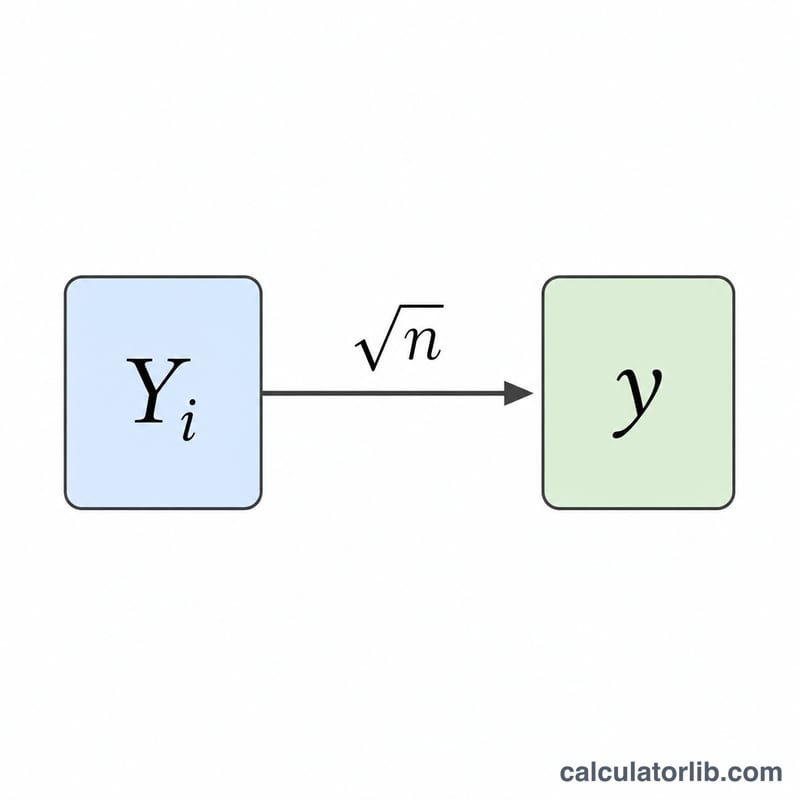
本函數由第二類圓柱貝索函數定義而來:

$$y_v(x) = \sqrt{\frac{\pi}{2x}}\; Y_{v+\frac{1}{2}}(x)$$

對於整數階數,可使用初等的封閉形式,例如 \(y_0(x) = -\cos(x)/x\) 與 \(y_1(x) = -\cos(x)/x^2 - \sin(x)/x\)。更高階則可透過向前遞迴關係求得:

$$y_{v+1}(x) = \frac{2v+1}{x}\cdot y_v(x) - y_{v-1}(x)$$
Advertisement
Relationship between spherical and cylindrical Bessel function of the second kind
The spherical function y_v(x) is obtained from the ordinary Bessel function Y of half-integer-shifted order times a scaling factor.

實例演算

以階數 \(v = 1\)、起始 \(x = 2\) 為例:

$$y_1(2) = -\frac{\cos(2)}{4} - \frac{\sin(2)}{2} = -\frac{-0.4161468}{4} - \frac{0.9092974}{2} = 0.1040367 - 0.4546487 = -0.3506120$$

若 \(v = 0\) 且 \(x = 1, 2, 3\),則分別得到 \(-0.540302\)、\(0.208073\)、\(0.329998\)。

常見問題

為什麼 \(x = 0\) 是未定義的?因為 \(\sqrt{\pi/(2x)}\) 這個因子與各個 \(1/x\) 項都會發散,所以 \(y_v(0) = -\infty\)。

\(x\) 可以是負數嗎?在標準的實數慣例下,\(y_v(x)\) 僅在 \(x > 0\) 時為實數;負的 \(x\) 會被標示為未定義。

當 \(x\) 很大時會如何?函數會以 \(1/x\) 的衰減包絡持續振盪:\(y_v(x) \approx -\cos(x - (v+1)\pi/2)/x\)。

最後更新: