
What is the Wells Score for Pulmonary Embolism?
The Wells Score is a validated clinical decision rule that estimates the pretest probability of pulmonary embolism (PE) in patients with suspected disease. By assigning weighted points to seven readily available clinical findings, it helps clinicians stratify patients and decide on the next diagnostic step — such as a D-dimer test or CT pulmonary angiography. This tool is a general clinical aid and does not replace physician judgment.
How to use it
Check each criterion that applies to your patient. The calculator adds the corresponding points automatically and reports the total along with both the three-tier and the simplified two-tier (dichotomized) risk interpretation.
The criteria and their points
The total Wells score is computed as:
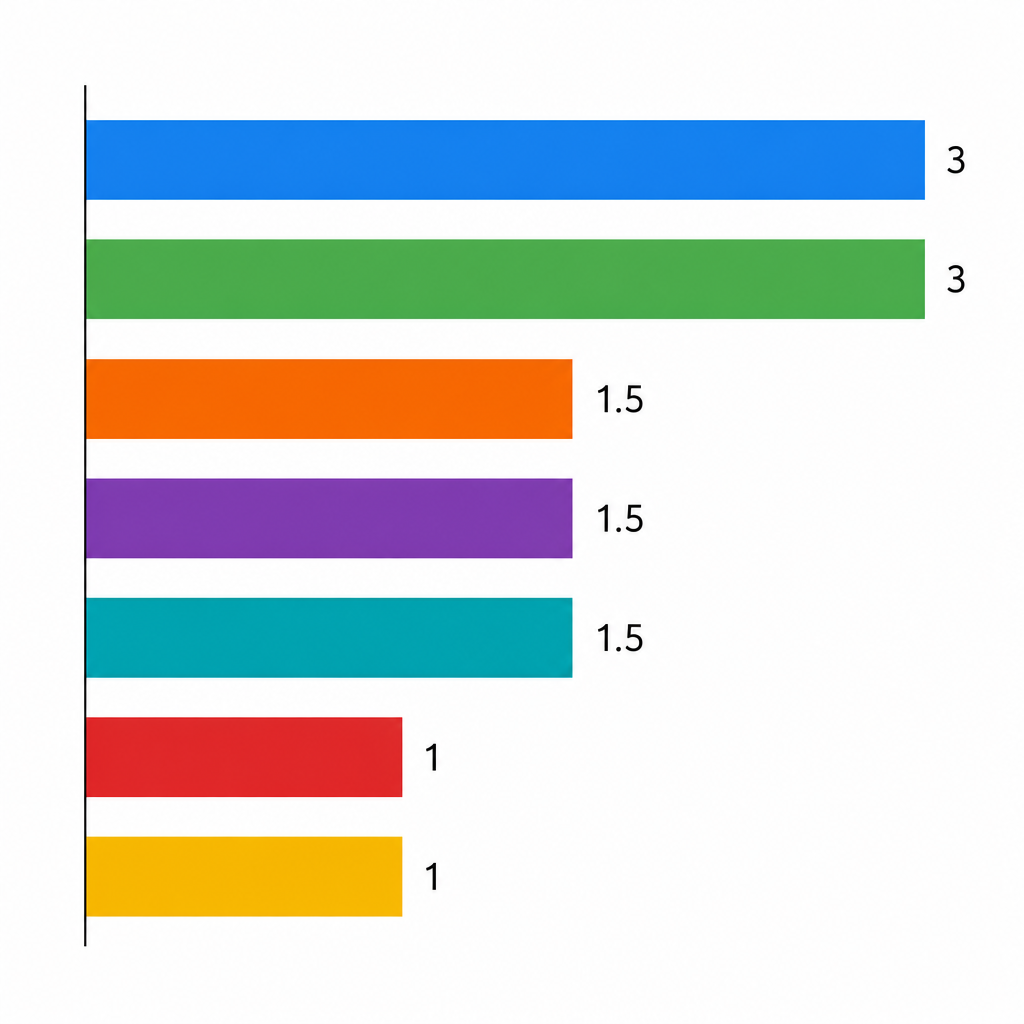
$$\text{Wells} = 3\,\text{DVT signs} + 3\,\text{PE \#1 Dx} + 1.5\,\text{HR}>100 + 1.5\,\text{Immobile/Surgery} + 1.5\,\text{Prior DVT/PE} + 1\,\text{Hemoptysis} + 1\,\text{Malignancy}$$Clinical signs of DVT: \(+3\) · PE is the most likely or an equally likely diagnosis: \(+3\) · Heart rate > 100 bpm: \(+1.5\) · Immobilization ≥ 3 days or surgery within 4 weeks: \(+1.5\) · Previous DVT or PE: \(+1.5\) · Hemoptysis: \(+1\) · Active malignancy: \(+1\).
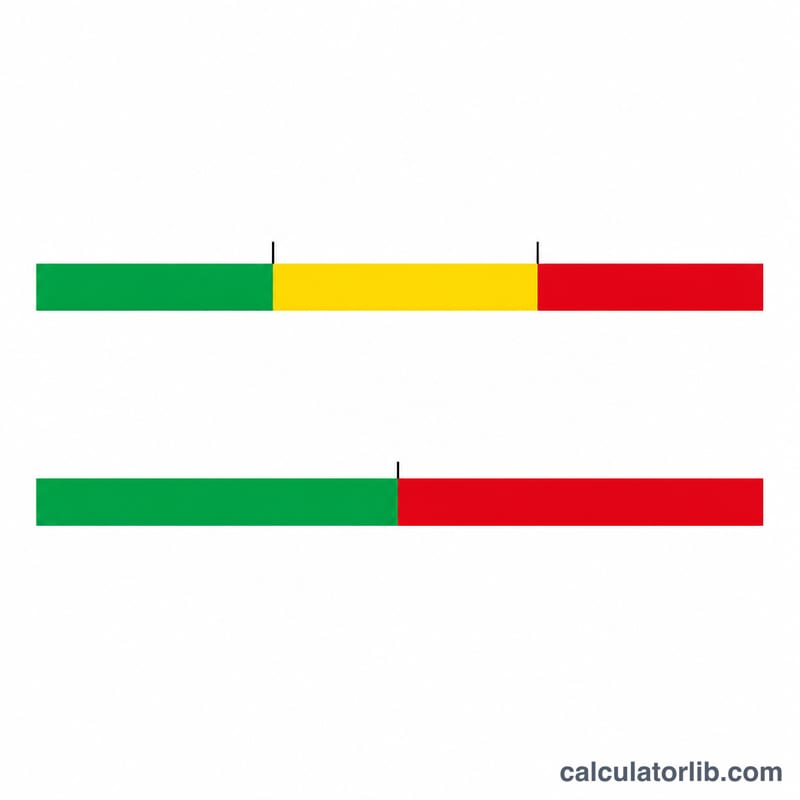
Three-tier: 0–1 = Low (~1.3%), 2–6 = Moderate (~16.2%), >6 = High (~37.5%). Two-tier: ≤4 = PE Unlikely, >4 = PE Likely.
Worked example
A patient has clinical signs of DVT (+3), a heart rate of 110 bpm (+1.5), and active cancer (+1). The total is $$3 + 1.5 + 1 = 5.5 \text{ points}$$ placing them in the moderate-risk three-tier group and the "PE Likely" two-tier group, supporting imaging.
FAQ
Is a D-dimer enough at low scores? In the two-tier model, "PE Unlikely" patients with a negative D-dimer can often have PE safely excluded.
Does the Wells Score diagnose PE? No — it estimates probability to guide testing, not to confirm or rule out PE on its own.
What is the maximum score? The maximum possible Wells PE score is \(12.5\) points.