
這個計算器的用途
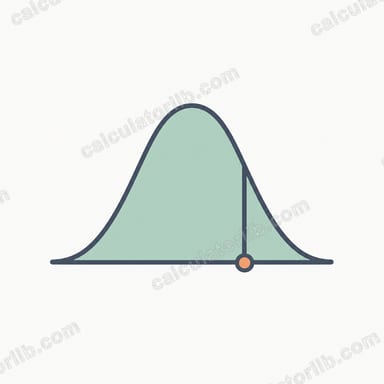
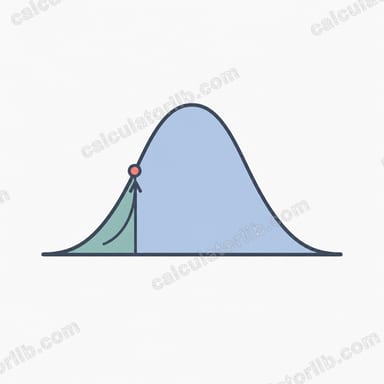
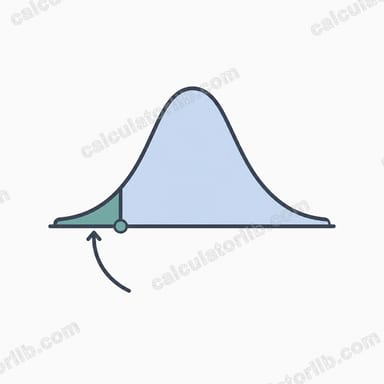
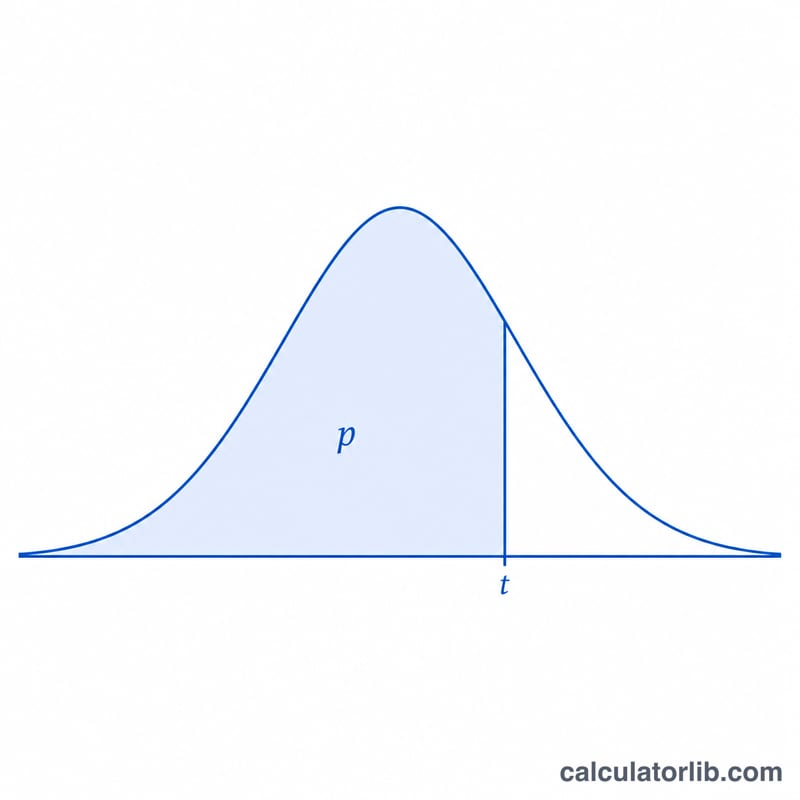
本工具用來計算 Student t 分配的百分位點(也稱為分位數、臨界值或逆累積分配函數)。只要輸入累積機率 P 與自由度 nu,工具就會回傳一個 t 值,使得 t 密度曲線到 t 為止所涵蓋的面積,恰好等於您所設定的機率。這正是 t 分配累積分配函數(CDF)的反函數,對應試算表中的 t.inv 函數。t 分配屬於通用的純數學,全世界的計算結果完全相同。
使用方法
輸入累積機率 P(須嚴格介於 0 與 1 之間),接著選擇 P 代表的是左尾面積(t 左側)還是右尾面積(t 右側),最後輸入自由度。計算器內部一律會轉換成左尾機率:若選左尾,直接使用 P;若選右尾,則改用 \(1 - P\),再據此求解 t。
公式說明
自由度為 nu 的 Student t 分配,其 CDF 可用正規化不完全 Beta 函數 I 來表示。當 \(t \ge 0\) 時, $$F(t) = 1 - \tfrac{1}{2}\,I_{x}\!\left(\tfrac{\nu}{2},\tfrac{1}{2}\right),\quad x=\frac{\nu}{\nu+t^{2}}$$ 當 \(t < 0\) 時,則使用對稱式 $$F(t) = \tfrac{1}{2}\,I_{x}\!\left(\tfrac{\nu}{2},\tfrac{1}{2}\right)$$ 不完全 Beta 函數的計算,採用 Lanczos 近似法處理 gamma 函數,並搭配標準的連分數演算法。由於 F 為嚴格遞增函數,因此可透過穩健的二分法求得其反函數: $$t = F^{-1}\!\left(\text{P};\ \nu\right)$$
實例演算
當 \(P = 0.975\)、左尾、自由度 \(\nu = 10\) 時,計算器會回傳 $$t \approx 2.228139$$ —— 也就是 t 分配表中常見的雙尾 95%(單尾 97.5%)臨界值。若改以 \(P = 0.025\) 搭配右尾,也會得到相同結果,因為右尾 2.5% 的面積等同於左尾 97.5% 的面積。
常見問題
如果輸入 \(P = 0\) 或 \(P = 1\) 會怎樣?此時百分位點沒有定義,會發散至負無限大或正無限大,計算器會回報錯誤。
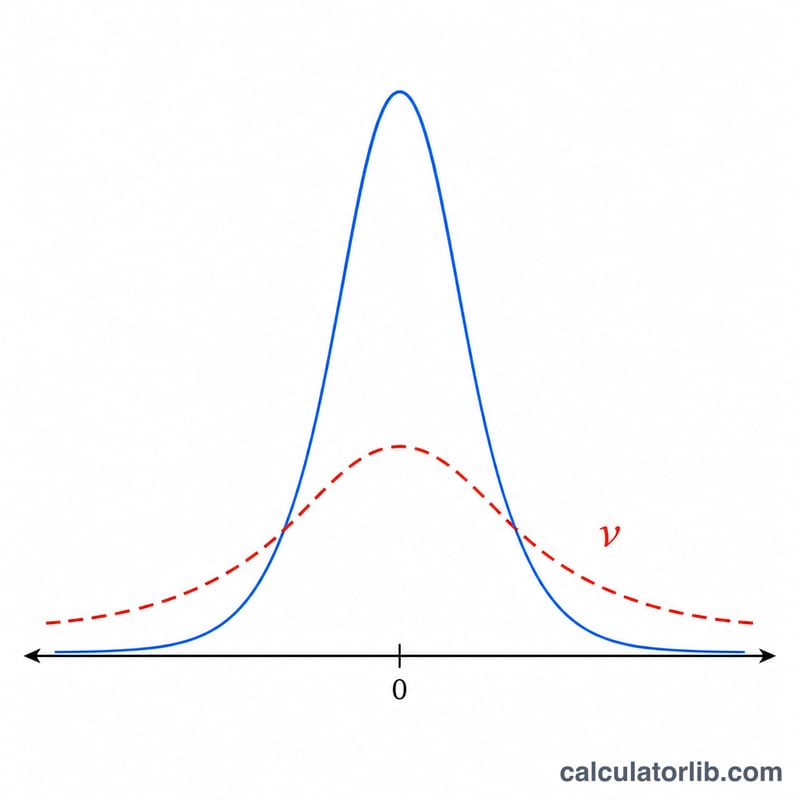
當自由度變得很大時會發生什麼?t 分配會逐漸趨近標準常態分配,因此當 nu 非常大時,分位數會接近常態分配的分位數(例如 \(P = 0.975\) 約為 \(1.95996\))。
nu 可以是非整數嗎?可以。任何大於 0 的 nu 都能接受,包含小數值。