
What the Rent Calculator Does
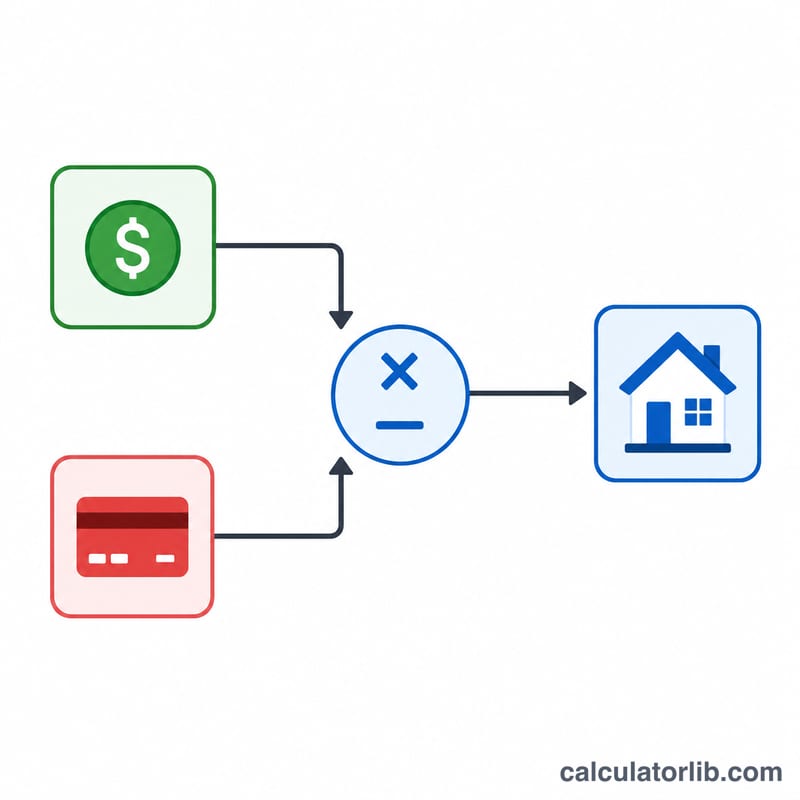
This Rent Calculator helps you work out how much rent you can comfortably afford based on two simple inputs: your pre-tax monthly income and your total monthly debt payments. Instead of guessing, it applies several recognised affordability rules at once so you can compare a generous limit, a strict limit and a debt-adjusted limit side by side. The debt figures use US-style lending conventions (the 36% and 43% debt-to-income thresholds common to American mortgage and rental underwriting), so it is most directly applicable in the United States, though the logic works anywhere.
The Inputs You Provide
- Your Pre-tax Monthly Income — your gross monthly earnings before taxes are deducted.
- Your Monthly Debt Payments — total recurring debt obligations, including car loans, student loans and credit card minimum payments.
The Formulas Used
The calculator runs three scenarios from your numbers:
- 30% Rule: Max Rent = Income × 0.30 — the classic conservative benchmark.
- 40% Rule: Max Rent = Income × 0.40 — an upper limit used in some high-cost areas.
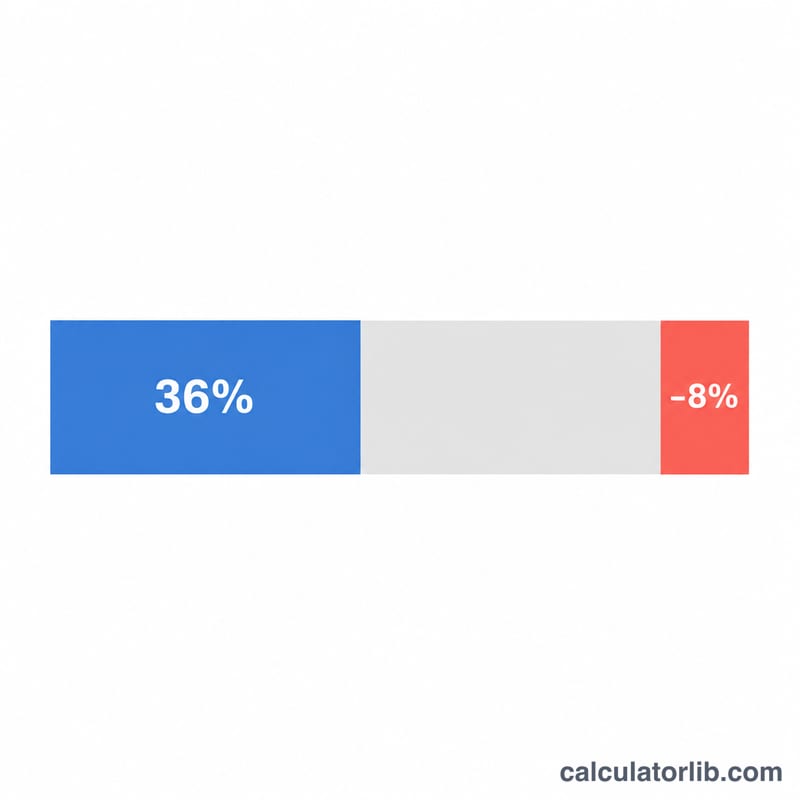
- Debt-Adjusted Max Rent: Max Rent = (Income × 0.36) − Monthly Debt — this reflects your real capacity after existing debt.
It also computes your debt-to-income ratio (Debt ÷ Income × 100) and assigns a status: Manageable, Caution (over 36%), High Risk (over 43%) or Not Recommended (when debt leaves no room for rent).
Worked Example
Suppose your pre-tax monthly income is $5,000 and your monthly debt payments total $600.
- 30% Rule: 5,000 × 0.30 = $1,500
- 40% Rule: 5,000 × 0.40 = $2,000
- Debt-Adjusted: (5,000 × 0.36) − 600 = 1,800 − 600 = $1,200
Your debt-to-income ratio is 600 ÷ 5,000 = 12%, well under 36%, so the status is Manageable. Since $1,200 falls between 20% and 40% of income, the recommendation is that this is a reasonable budget for your income.
Frequently Asked Questions
Why is the debt-adjusted rent lower than the 30% figure? Because it subtracts your existing debt from 36% of income. The more debt you carry, the less is left for rent — giving a more realistic picture than the flat 30% rule.
What if the debt-adjusted result is negative? That means your debt already exceeds your affordable housing budget. The tool flags this as "Not Recommended" and suggests reducing debt before renting.
Should I use gross or net income? Use pre-tax (gross) income, as that is what landlords and the 30%/36% rules are based on.