
What the Critical Value Calculator Does
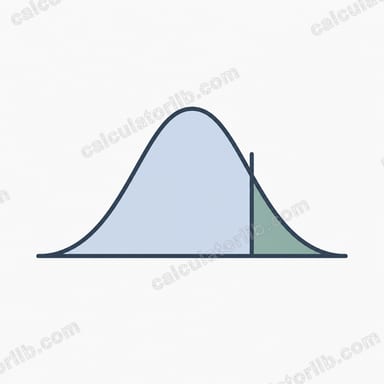
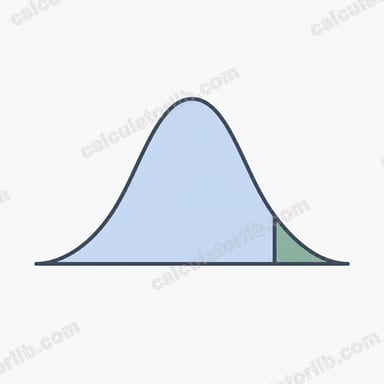
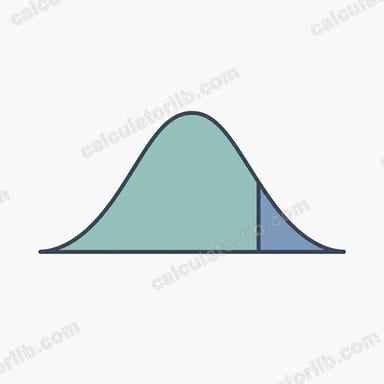
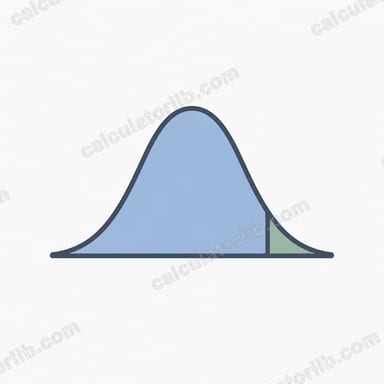
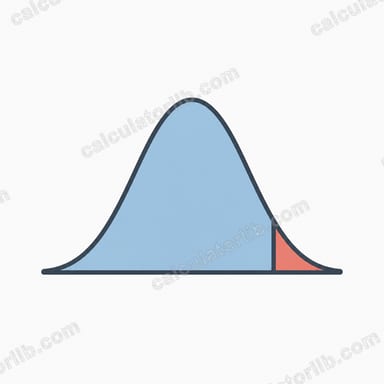
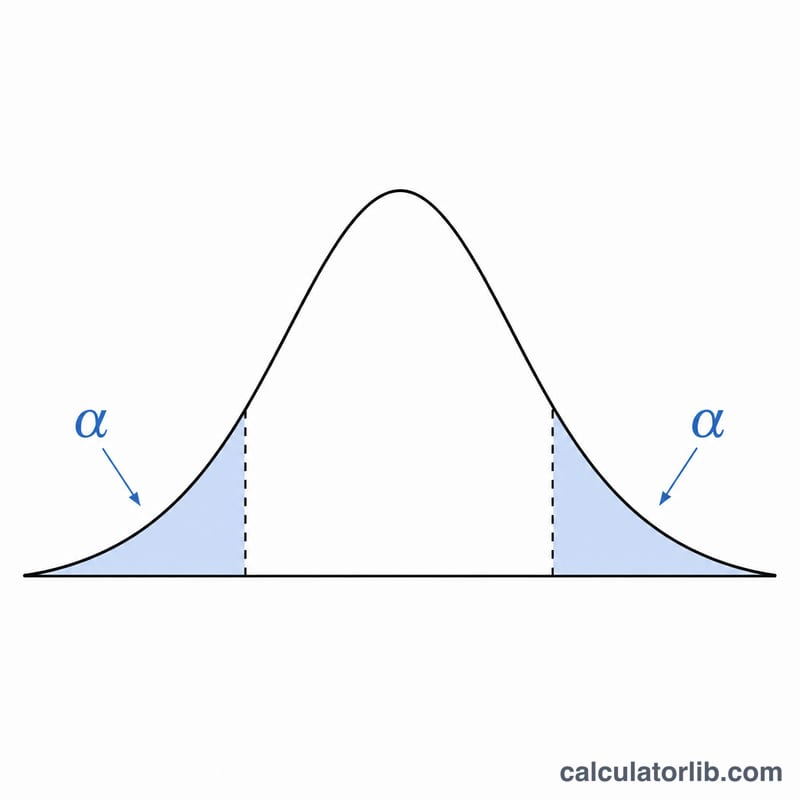
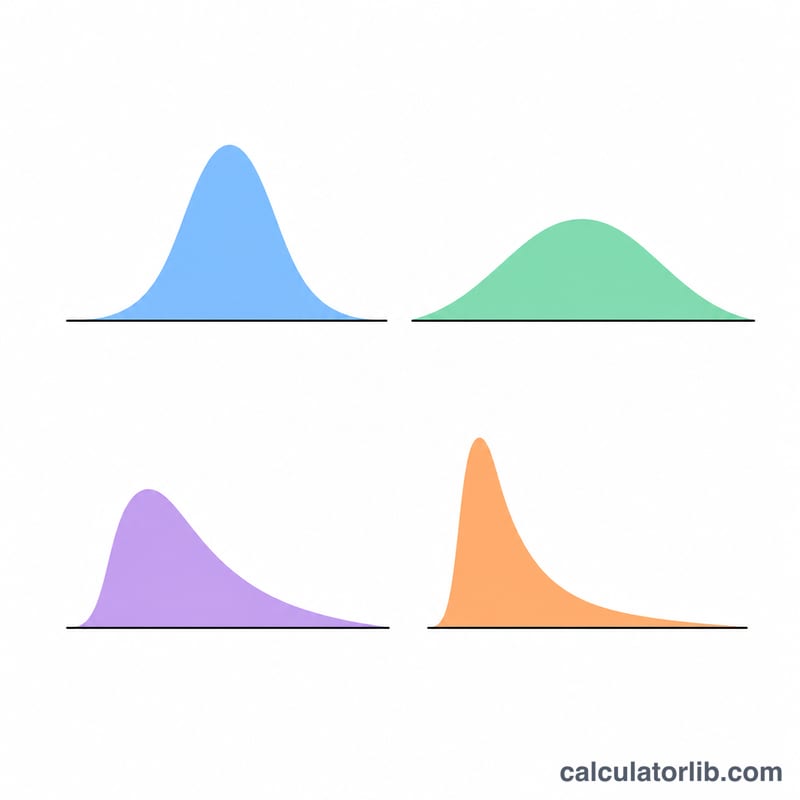
This calculator finds the critical value you need for a statistical hypothesis test or confidence interval. A critical value is the cut-off point on a probability distribution that separates the region where you reject the null hypothesis from the region where you do not. Instead of looking up dusty statistical tables, you enter a few details and get an exact figure for the normal (Z), Student's t, chi-square (\(\chi^2\)), or F distribution.
The Inputs Explained
- Confidence Level (%) – e.g. 95. The tool converts this to the significance level alpha using \(\alpha = \frac{100 - \text{confidence level}}{100}\). A 95% level gives \(\alpha = 0.05\).
- Distribution Type – choose Normal (Z), Student's t, Chi-square (\(\chi^2\)), or F.
- Degrees of Freedom – required for t, chi-square, and F. For F this is the numerator degrees of freedom.
- Degrees of Freedom (denominator) – only used by the F distribution.
The Formula Behind It
The calculator uses the inverse cumulative distribution function (the quantile function) of the chosen distribution:
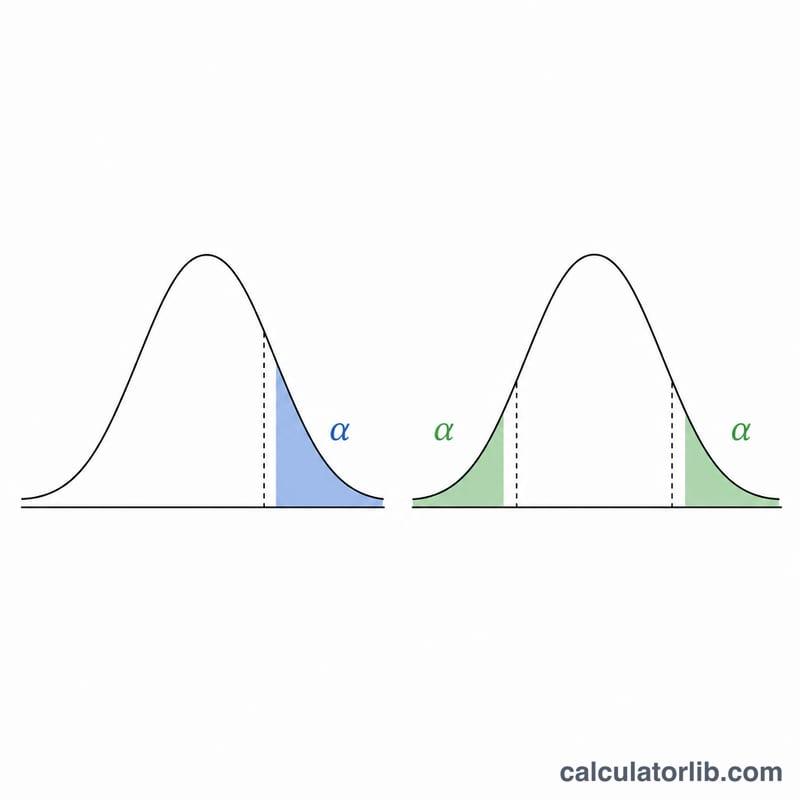
- Normal & t (two-tailed): critical value = \(\left|\text{inverseCDF}\!\left(\frac{\alpha}{2}\right)\right|\). The alpha is split between two tails.
- Chi-square & F (right-tailed): critical value = \(\text{inverseCDF}(1 - \alpha)\), all of alpha placed in the upper tail.
Worked Example
Suppose you run a two-tailed t-test at a 95% confidence level with 20 degrees of freedom. \(\alpha = \frac{100 - 95}{100} = 0.05\), so \(\frac{\alpha}{2} = 0.025\). The calculator evaluates the inverse CDF of the t-distribution with 20 df at 0.025 and returns the absolute value, giving a critical value of approximately 2.086. If your test statistic exceeds 2.086 in magnitude, you reject the null hypothesis.
For a chi-square test at 95% with 10 df, it computes \(\text{inverseCDF}(0.95) \approx\) 18.31.
Frequently Asked Questions
Why is the Z/t result two-tailed? The tool divides alpha by two for the normal and t distributions, reflecting the standard two-sided test. For a one-tailed test, enter a confidence level adjusted accordingly (e.g. use 90% to mimic a one-tailed 95% bound).
Do I need degrees of freedom for the normal distribution? No. The Z critical value depends only on the confidence level. Degrees of freedom matter for t, chi-square, and F.
When do I fill in the denominator degrees of freedom? Only for the F distribution, which needs both numerator and denominator degrees of freedom (common in ANOVA and variance comparisons).